ESCAPE

Some, who have been following this blog, may be wondering how our father did not suffer the same fate as the rest of his family.  My sister who has written some poignant commentary attached to this blog, has written about his escape. The following is her piece that describes the circumstances of how he eluded capture.

This past June, we set out to understand for ourselves what had happened to our family during World War II.  They had been systematically and brutally rounded up, deported and killed. Their towns today are “Juden rein” (free of Jews).  Hitler achieved his Final Solution in Macedonia and Thrace.  We wanted to get closer to those who suffered this fate. It was a heart-wrenching experience, but amidst the pain and sorrow, we found unexpected comfort and warmth from people we met. Surprised and curious about our very existence, we were welcomed .  They were fascinated to learn of our story, as we were born to a survivor whose existence was not known to them.  There were no survivors!  Before them, however, stood the next generation. We are the descendants of at least one family from the Jews of Xanthi in Thrace.  The Nazis did not succeed, we are alive, they did not eradicate us all. From one survivor, our family now numbers 36, and counting!

This is the story of a brave and determined young man, who was able to get away. We, his children exist today thanks to the will and courage of this 21 year old who decided that he would not fall victim to adolf hitler.

His journey was filled with miracles and coincidences. His unique sense of perseverance and grit resulted in his escape from hitler’s grasp.

It was Passover, 1940, when Dad had taken a few days off from the University of Thessaloniki to visit his family in Xanthi and the Seder conversation revolved around the situation in Europe. His parents warned him that the Nazis would likely invade Greece and, if this happened, he should make his escape to Crete. They did not know about the concentration camps, they only knew that young Jewish men were being sent to labor camps.

By 1941, his university in Thessaloniki had shut down because of the Greco Italian conflict, and he found a job in Alexandroupoli. The Germans invaded Greece on April 11 the same year. Remembering his father’s urging, he, along with three friends, escaped the mainland by stealing a small row boat sitting along the shoreline.  For 30 hours, these four men rowed until they reached the nearest island, Samothrace, only to find panic and pandemonium there.

What happened next was an extraordinary sequence of luck and coincidence;  In Samothrace, his friends decided not to go further. Our father knew that the arrival of the Nazi’s was imminent. Determined to find a means of escape, he happened to see a boat that looked vaguely familiar, docked 100 m off-shore. Seeing no other real options, he jumped into the Aegean Sea, and swam to it where he discovered that it, in fact, belonged to his Uncle Moise’s close friend, Stefanopolis, who, as fate would have it, was on board when he swam alongside. Stefanopolis offered him a ride to the next island, Lemnos, where, within days of his arrival, our father learned that the Germans had landed in Samothrace.

Absent any defenses in Lemnos, he knew he had to continue south but there was no way off the island. Again, luck was on his side:  he befriended a young man named Limenarchio who, fortuitously, worked for the Port Authority.   Dad would later refer to this chance friendship as the single most important event that saved his life. Limenarchio offered his help in acquiring Dad a Sailor Identity document, a paper allowing him to travel the world’s oceans. Armed with this authorization, he, again by chance, fell upon the father of a high school classmate, who was the captain of a boat going to the next large island-Lesbos. He got another ride.

In Lesbos he learned that the Germans were already parachuting onto Crete. He changed plans. Although he was a merchant on the mainland, serendipitously, his uncle Moise’s boat was docked in the Lesbos harbor. With his uncle’s connections, he signed on as a sailor aboard a small boat going to Istanbul.  He entered Turkey illegally and for 6 weeks he had to evade the Turkish police while standing for hours in lines trying to gain access to various foreign embassies. No one would help him, not the Americans, not the French, not the British nor any of the South American countries.

What next? Having grown up with the advent of air travel, he was drawn to the idea of flying a plane. Good fortune was on his side, once again, when through a family friend, he was introduced to the British Air Attache. Dad volunteered to become a pilot with the Royal Air Force and was issued an entry visa into Palestine, which was a British Protectorate at the time.  He had to report to RAF Headquarters in Jerusalem. He now faced a new challenge – how to get himself there with no money!  A harrowing series of bus, train and boat trips followed, but 3 months after beginning his escape, he arrived at the port of Haifa.

He trained as a pilot in Gaza and Rehovot.  It was during that latter training period that Dad met the 17 year-old high school beauty whom he would eventually marry – our Mother.  Two months later, Dad joined the Bomber Squadron in Northern Egypt where he participated in bomber battles in the North African theater.

In March 1943, Dad received one last letter from home. It was a distressing missive expressing anxiety that Jews were being sent to concentration camps. Shortly thereafter he was called into the office of his squadron leader who showed him a newspaper article reporting that the Jews of Thrace had been rounded up and sent to Treblinka, a death camp!  His whole family was murdered.

Some months later, Dad was transferred training operations in Southern Rhodesia (now Zimbabwe) where he trained others to become pilots…and later, where he began the rest of his amazing life…but that is another story.

When Dad was well into his eighties, we were finally able to convince him to talk about his escape and how he felt that day when he arrived at the port of Haifa:
“I felt I had finally made it to Palestine, that I was safe.  I did not know then, that I had also evaded the fate that my family suffered. I would never be a casualty of the Holocaust, I would be a survivor!”

Still, Treblinka

We jumped back into our car, shooing out flying insects that invaded our space, drove away, quiet with our thoughts, taking in what we had just experienced, the climax of our journey, how to process?  We visited this place.  This wasn’t a visit to a place.  We saw the surroundings.  This wasn’t to view the surroundings.  We viewed the monuments.  This wasn’t a viewing of monuments.  Treblinka.  To see this name on a sign pointing us in the direction of the space we experienced was hair raising.  Treblinka.  To keep saying this word without loosing the profoundness of its meaning, sacrosanct.  Treblinka.  A village nearby where this word is part of peoples’ addresses.  We breathed the air and choked on it.  We walked the rail lines and tripped on them.  Our feet walked the ground that theirs did.  We were there.  We were where they were.  We honor them with our hearts and souls.  It was the great honor of our lives, being there.  It was the great sorrow of our lives, being there.  Driving away, we said to each other words that came to our minds.  This was Treblinka.

____________________________

                  forest

thick green forest leaves shimmering wind

    forest forest forest insect flying                   cobblestones hurt

                                           like connecticut

stone path

.                             insects flying angry                      TRAIN TRACKS          TRAIN PLATform

.                     insects flying angry                        a time that humanity lost its way

.                                                         insects AGGRESSIVE flying angry

insects flying face body angry                   wasps and bees and horseflies and flies and and and 

.                      Humid Hot Flies Bites                           birds singing??????

                                    black pit          800,000 souls calling

17,000 STONES                   silence                            sound of wind                       comforting stones

.               solitude                horseflies BITING through clothes

.                          grief

.                                 sad                                               JUSTICE                     FEAR                  72 YEARS

.                                       loss                                                     1943     1943      1943      1943       1943      1943

.               assaulted by mosquitoes and bees and wasps and horseflies and gnats and thoughts and and and and

.                                                                                                                                            contempt

.                                                                                                                                      anger

.                                                                                                                        violation

.                                                                                                              cruelty

.                                                                                                   inhuman

.                                                                                           devils

.                                                                              deception

.                                                lies . . stench . . filth

.                            WATER . . EXCREMENT . . STARVATION . . . FEAR . . . HORROR . . . LIARS 

.                 INNOCENT          food        cold     JUDENHEIDEN     horror      terror       confusion      questions

why  why  WHY  why  why  WHY  WHY  WHY  WHY  

.                                                  CONFUSION     pain     suffering                        excruciating   bees

.                  flying insects

.                             HORROR       TORTURE

.                                                                  Succumb            GIVE UP

MOTHER     father    sister   AUNTS    brother  grandmother  cousins  Uncles

.                  FAMILY

Treblinka #2

I am finding it difficult to write a blog about Treblinka. It has left me floundering for words, difficult to describe because it is overwhelming, its very dark, its disturbing, its silent, it feels like there are a million people there, but its empty, its heavy, its everything it should be.

It was strange driving toward Treblinka on the little country roads because, although we knew we were very close, the scenery was beautiful. Thick with luscious green trees, leaves shimmering in the soft breeze, it looked like Connecticut. How could we be close with all this beauty around us, how could we, in a matter of minutes, be in that excruciatingly ugly place.  Pretty little houses spotted the roadside, clusters of houses just three minutes before we reached that place, old houses, they were there then. Could the walls of those little houses still smell the stench of human flesh burning? Almost no signage, strange.

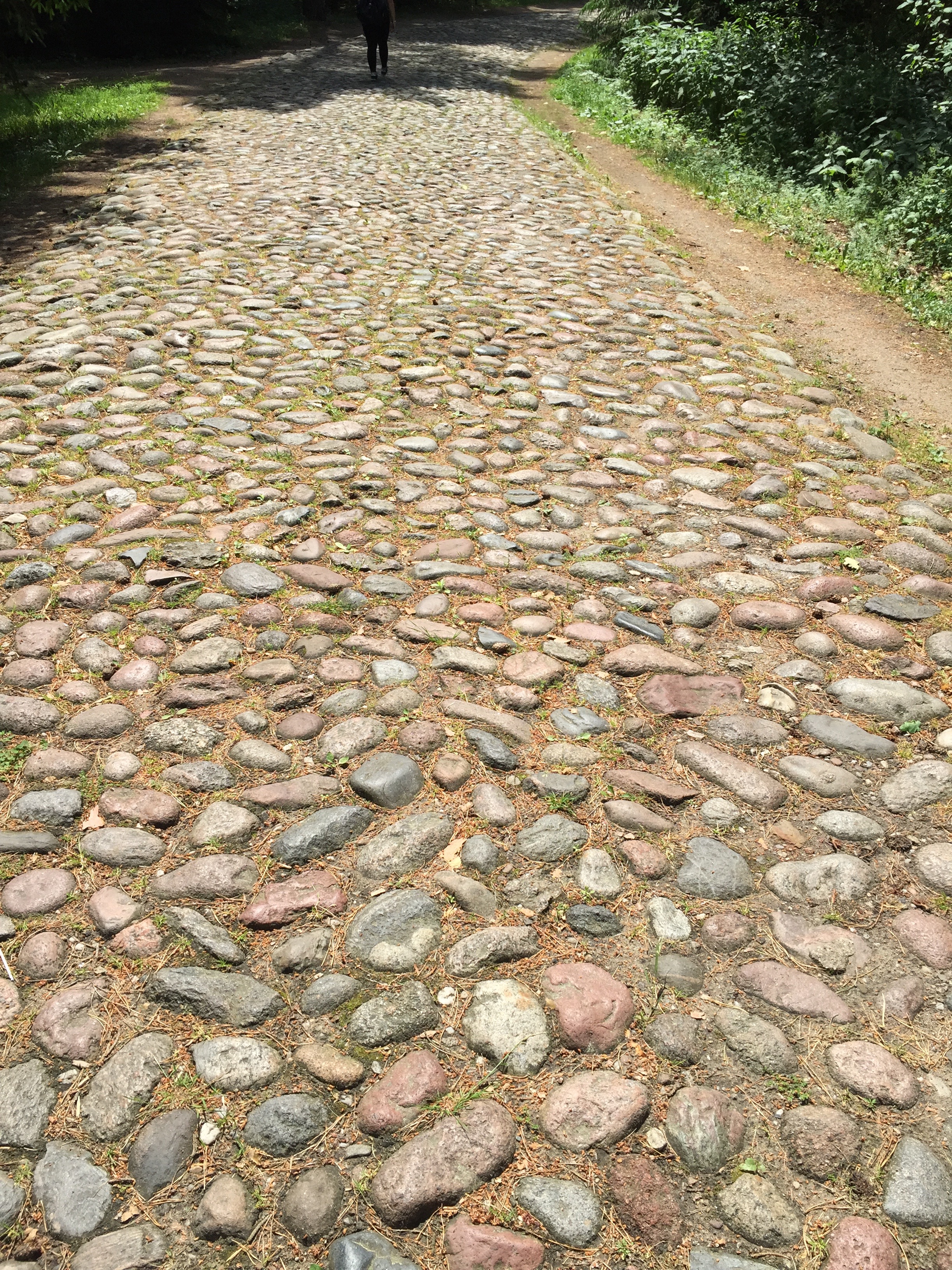
Everything about Treblinka was hard. It was hard to find the place, no visual effort to direct visitors. It was hard to deal with all the flying insects aggressively and constantly attacking us. It was hard to walk on the cobblestone path that hurt my feet through the soles of my shoes, up to the memorial. It was hard to deal with the heat and humidity that hung heavily in the air. It was hard to look at the picture of the camp commandant, franz stangle, who was “promoted” to this position because of his skill not only in following orders but also in implementing them more effectively than his competing colleagues.

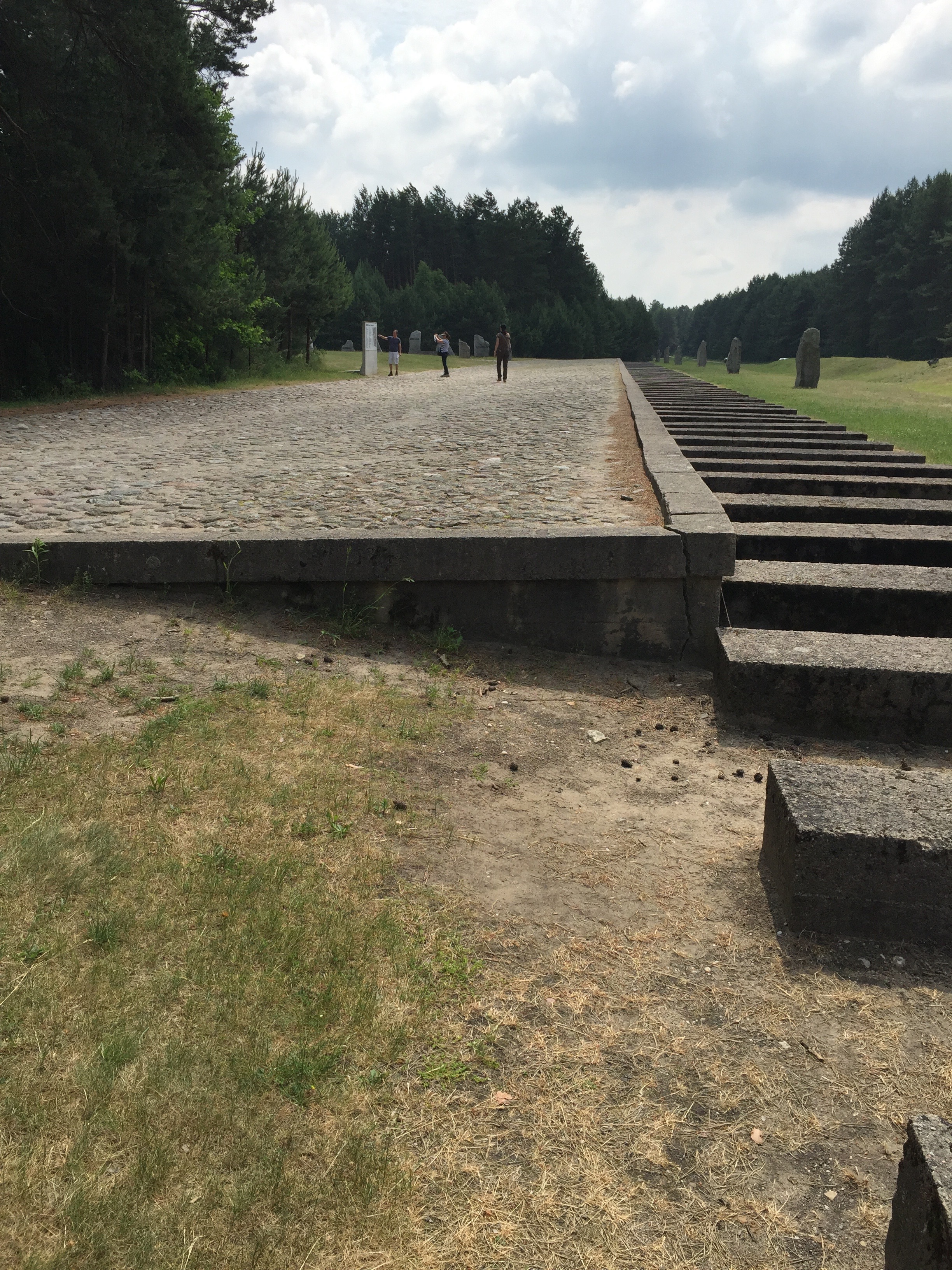
Everyone sent to Treblinka was killed. No selections. No labor force*. Death. It was not a concentration camp, it was a death camp. I walked along the symbolic railroad tracks, one track at a time and heard the chugging of the train carrying its human cargo. My chest was heavy, hard to breathe, nauseous, ears ringing, don’t faint! Took a picture. Insects flying in my mouth. Breathe. Climbed onto the “station platform”. I saw the bags, the clothing, the last of their belongings piled behind them on the platform. The lies. “You are going to have showers after your long journey! Take off all your clothes!” I saw them walking, naked, covering themselves with their hands, even their modesty violated instantly. I choked, sobbed, and walked from the “station platform” to the memorial on the place of the gas chamber. It took less than five minutes to get there.

We said Kaddish for our family who didn’t know till the moment they breathed the gas into their lungs that their final destination was Treblinka. We recited their names together, out loud, for them to hear.

Our grandfather, Solomon was 56 years old.

Our grandmother, Regina was 44 years old.

Our aunt, Elsa was 19 years old.

Our uncle, Freddi was 11 years old.

Our great uncle, Moise was 36 years old.

Our great aunt, Marie Michelle was about 34 years old.

Our cousins, Oscar and Beatrice were not teenagers yet.

Our great aunt, Binuta was about 50 years old. Our cousin,

Avramico  was 21 years old.

Our cousin, Matilda was about 18 years old.

Our great aunt, Linda was about 50 years old.

Our great uncle, Chilibi was about 58 years old.

Our cousins, Inez and Colombo were both under 25 years old.

Our great grandmother, Ne’ama who died on the train was 80 years old.

We walked out of the camp, passed the stones, past the memorials, and I tried to find them, to feel them. I focused on each of them, I searched my thoughts and being for them.  I couldn’t find them. I focused more, I needed to find them, to connect with them . . . . . . and I realized, they are not there. They are gone from that place. That place is empty.

*There were a small number of prisoners who were kept alive for the sole purpose of providing labor for the death machine. A handful of these souls survived.

Treblinka, Its Angry Flying Insects

We arrived in Poland. Using GPS, we drove to Treblinka but it took us only to the town, there were very few signs to the death camp. It was impossible to find it without asking locals, it was located far off the main road, deep in a very forested area, easy to take a wrong turn and get lost completely.

We arrived after following a taxi that we assumed was taking people to the same destination. In my next blog about Treblinka, I will describe our impressions further, but here, I must write about a bizarre phenomenon we experienced at this site, the place where twenty members of our family were murdered probably within thirty minutes of their arrival by train.

The Memorial is essentially 17,000 large stones symbolizing tombstones, all different shapes and sizes, placed on concrete; a large, tower like monument rested heavily on the place where the gas chamber operated and where 800,000 to 900,000 people were gassed; fifty yards away a large, flat rectangular area filled with black basalt surrounded by eighteen miniature black hut-like structures each containing a memorial candle, marked the place where bodies were first thrown into a massive pit and buried but subsequently exhumed and burned to hide the monstrousness of their crimes when they were losing the war.

IMG_1178  IMG_1180  IMG_1173

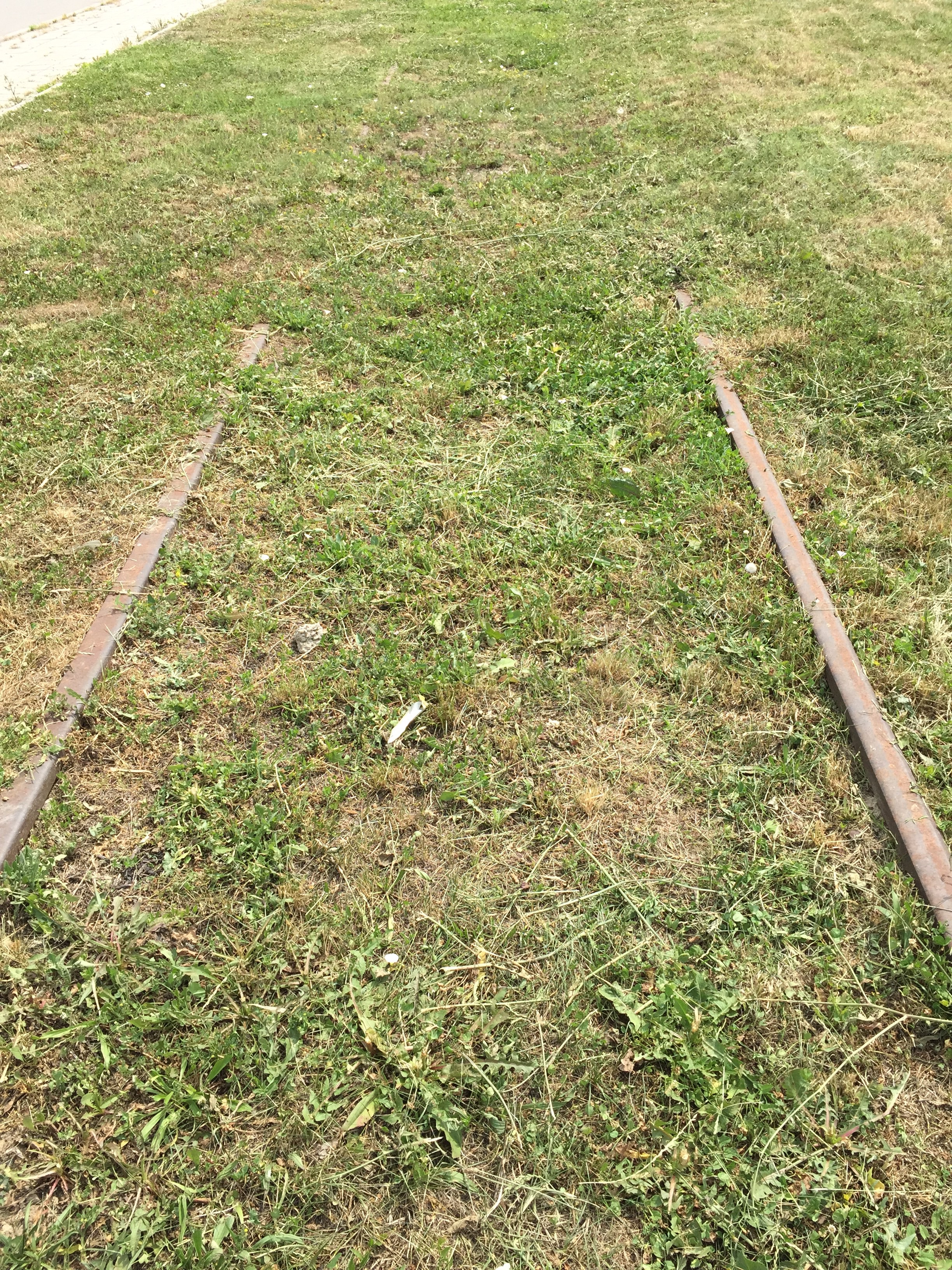
We arrived, opened the car doors to be greeted by hot, humid air, teeming with hundreds, thousands of flies and mosquitoes flying speedily and haphazardly around us, into our faces, onto our bodies. As we walked toward the memorial site on very large cobblestones that were difficult, even hurtful through our shoes, the flying insects became more profuse and aggressive, following us as we walked along the symbolic train tracks onto the platform where people were dumped out of the trains and instructed to leave all belongings.

IMG_1143  IMG_1164

The insects did not subside, the closer we got to the memorial stones, the more difficult it became to negotiate our way through the onslaught of insects. It became almost unbearable as we stood close to the large memorial on the site of the gas chamber, and intolerable when we recited the Kadish on the edge of the black rectangle on the site where they were burned. Wasps, bees, flies, mosquitoes, horseflies all buzzed around our faces, our hands, our bodies, angrily, incessantly, mercilessly, forcing us to move, skip, swat, do anything to get away.

I walked to the beginning of the many concrete areas filled with “head stones” and began walking among the stones. I walked alone, immersing my mind in the space we were in.  After a few moments, it dawned on me, the flying insects had disappeared. It was calm; I was left alone to interact with the stones; I walked for about an hour, sometimes stopping to touch a stone, or to place a small stone on one of the many “head stones”, NO FLYING INSECTS. As soon as I stepped off of the concrete and away from the “tomb stones”, I was immediately assaulted by insects again, as angry and as aggressive as before, making it hard to breathe.  As we were walking back to our car, we stopped at the walls that marked the beginning of the memorial to recite the names of our murdered relatives, the insect aggression did not subside, determined to make us endure their unrelenting presence, until we finally got back into our rented car, and closed the doors.

We never encountered the insects anywhere else, not in the neighboring town five minutes from the site, not in the town of Brog just twenty minutes from the site of the death camp, also surrounded by forest, NOWHERE.

LOM to Vienna to Poland

The Danube, a beautiful name, my imagination conjures up romantic scenes with beguiling women in silk evening gowns, in love with handsome paramours sipping champagne, the waters reflecting the moonlight shimmering and gracefully swaying in the night. An exotic river.

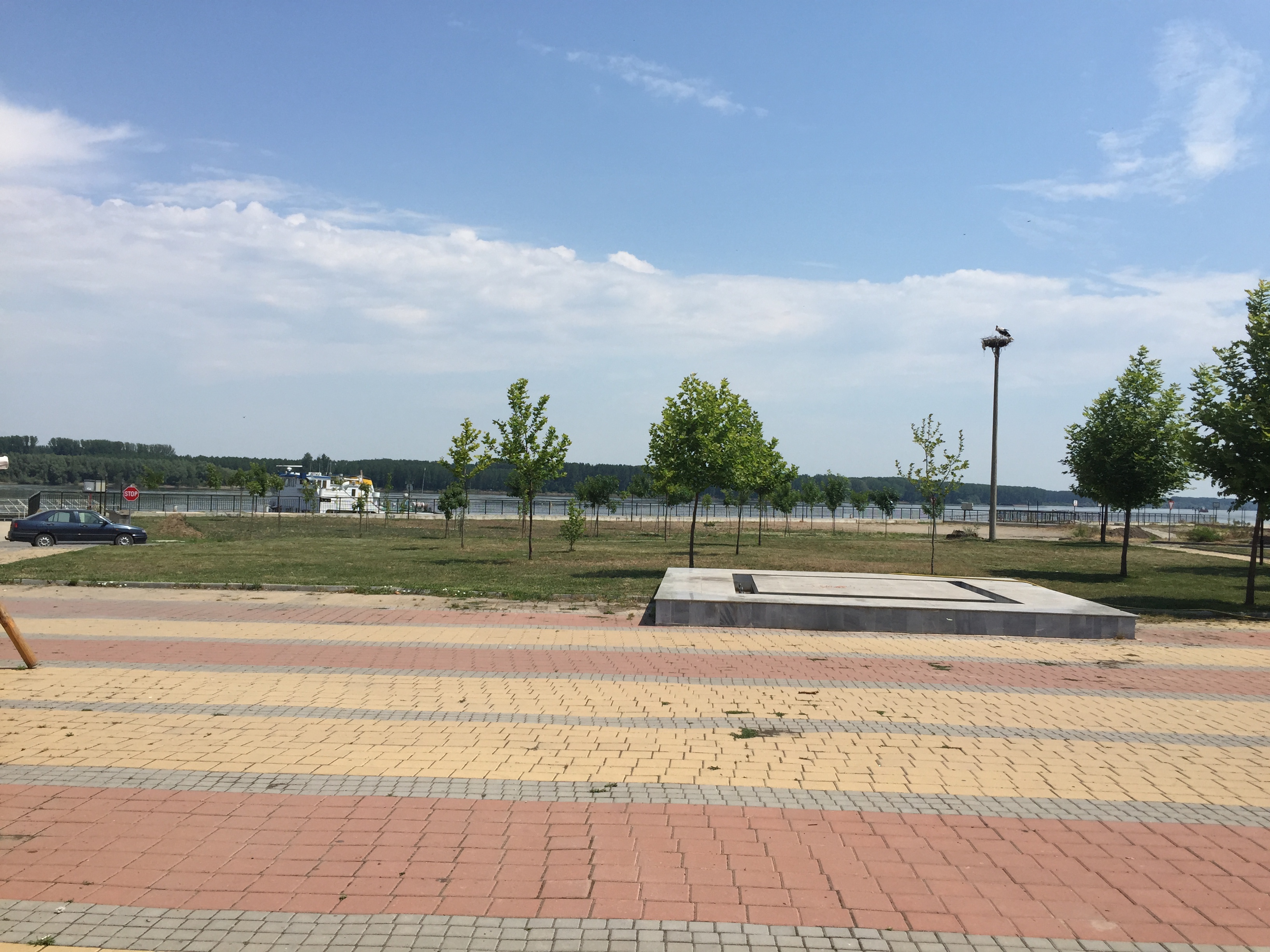
My brother and I stood on the banks of this great river, reflecting what it had seen seventy two years ago, surely the river decried the great violation forced on its waters, waters that were meant to reflect beauty, carry cargo for sustenance, or embrace moments shared by lovers on its banks.

By the time the deportees left the small port of Lom, it was March 21, 1943. They had been en route for about 18 treacherous days as they began the long trip to Vienna on the Danube river.

We had been unable to find any information about the journey from Lom to Vienna except that they sailed on four barges. Other than the names of the barges, we know nothing more.

We tried for many weeks to find a way to sail part of the way on some type of sea vessel but were unsuccessful. Other than cruise ships, no other passenger boats operate on the Danube. We settled for second class train travel, a departure from our mission to travel in the same mode of transportation as our family did, but we didn’t detour from the spirit of the journey. We were not tourists and we did not choose to spend any time doing what we might have done as tourists. We talked about our family, tried to pin point historical information, researched further and remained “in character”.

Once in Vienna, where our family was herded back onto trains, we too took a train to Poland, again second class although it resembled the lowest class possible. Once in Poland however, we were unable to travel by train to the location of the Treblinka death camp as no trains operate that route these days. We rented a car in Warsaw and drove to Treblinka.

LOM

We had reached the most uncertain part of our trip. Destination: Lom on the Danube river, a tiny port village at the northernmost corner of Bulgaria. Across the river, Romania. Everyone warned us about trying to go to Lom, “watch out for thieves”, “no-one speaks English”, “You’ll never figure out where to go”, “You’ll be stranded!” But Lom was not negotiable, it was a significant stop on our family’s journey and could not be missed

IMG_7107

After spending ten horrific days in the tobacco warehouse of Dupnitsa and Gormo Djumaya, the Jews from all the cities and towns of Thrace, Eastern Macedonia, and Pirot in Serbia converged in Sofia and continued on to Lom. This was the point on their journey that the Bulgarian police turned their charge over to the Germans.  Approximately 4,200 souls were loaded onto barges and in dangerous, crowded and inhumanly deprived conditions, sailed along the Danube to Vienna.

In the course of our research, we found out that my father’s grandmother, Ne’ama Levy Hattem had moved from Alexandroupolis to Xanthi to live with her daughter, Regina, our grandmother.  She was deported together with them from Xanthi, but unable to withstand the brutality, died on the trains sometime after leaving Dupnitsa before arriving in Lom. This 80 year old woman who had been devoted to her family, loved her children and grandchildren unconditionally, had suffered indignities, pain and trauma that she could no longer bear. Her death, we thought, was a mercy. It spared her from the brutality that awaited the rest of the family.   Her body and those of four other prisoners who had also died, had been turned over to the local Jewish community in Lom where they buried them, in the Jewish Cemetery in unmarked graves. One of our missions in Lom was to find her grave.

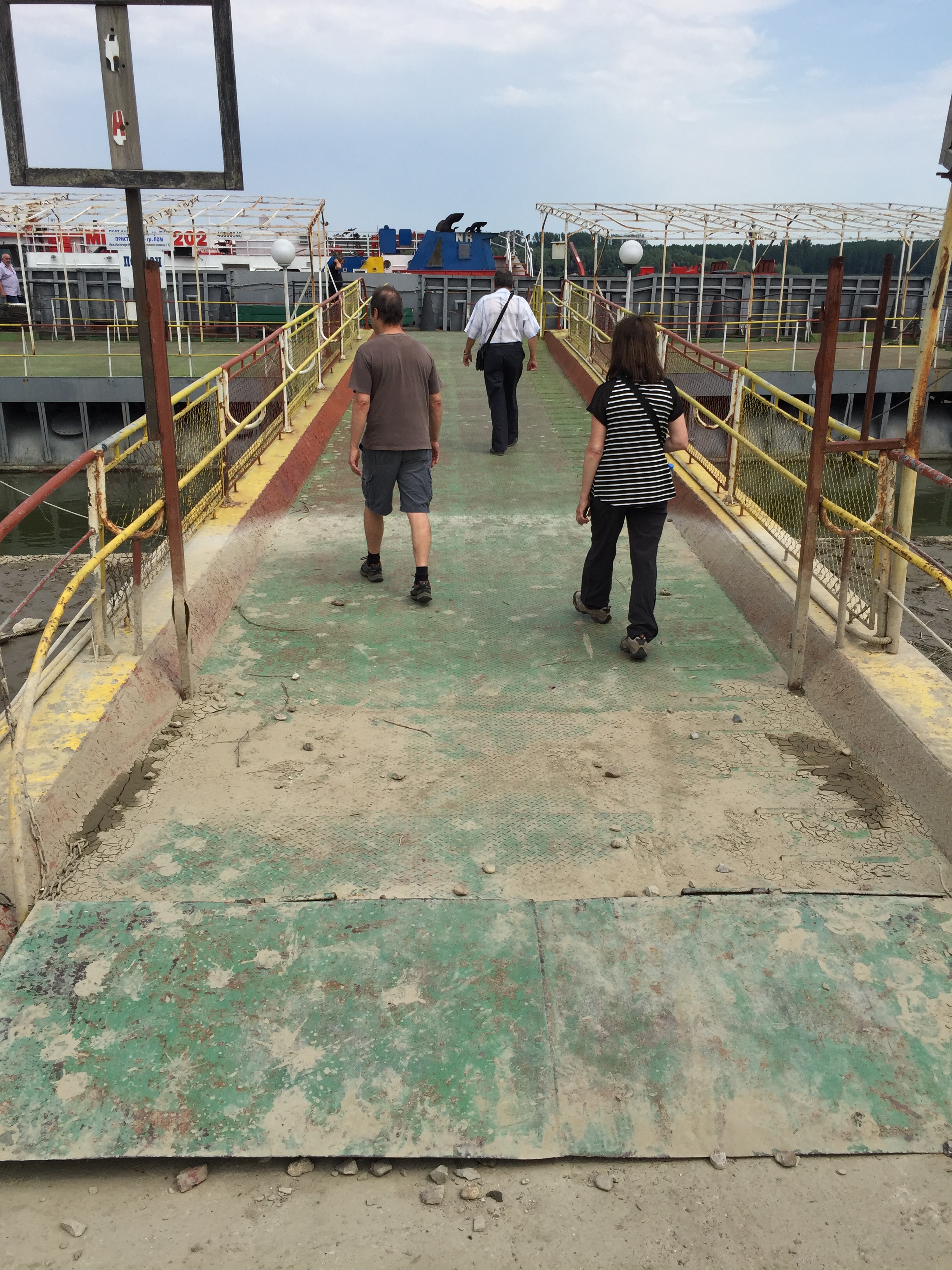
I stood on the banks of the Danube river where they had disembarked from the trains to board one of four dilapidated barges that would take them to Vienna. It’s a beautiful river, its waters calm and blue under a deep blue sky.  What was the weather like that day in March 1943?  It was surely cold, still winter, as they stepped onto the barges, perhaps wrapped in coats if they had had not been stolen from them. I could hear the Germans barking orders at them, and the dogs, the growling, teeth baring dogs, terrifying them further. The beauty of the Danube evaporated in my mind, I saw them, walking over the little curved bridge, clutching one another, tired and hungry, not knowing what was going to happen to them or where they were headed

            IMG_0949  IMG_7102  IMG_0951  IMG_7085

Townspeople including local Jews watched from a distance, horrified at the scene. I could hear words from a first hand account of the scene:

I heard a woman shout, “Please madam, give greetings to the local Rabbi from his daughter from Gumuljina and tell him that I don’t know where I am going”.

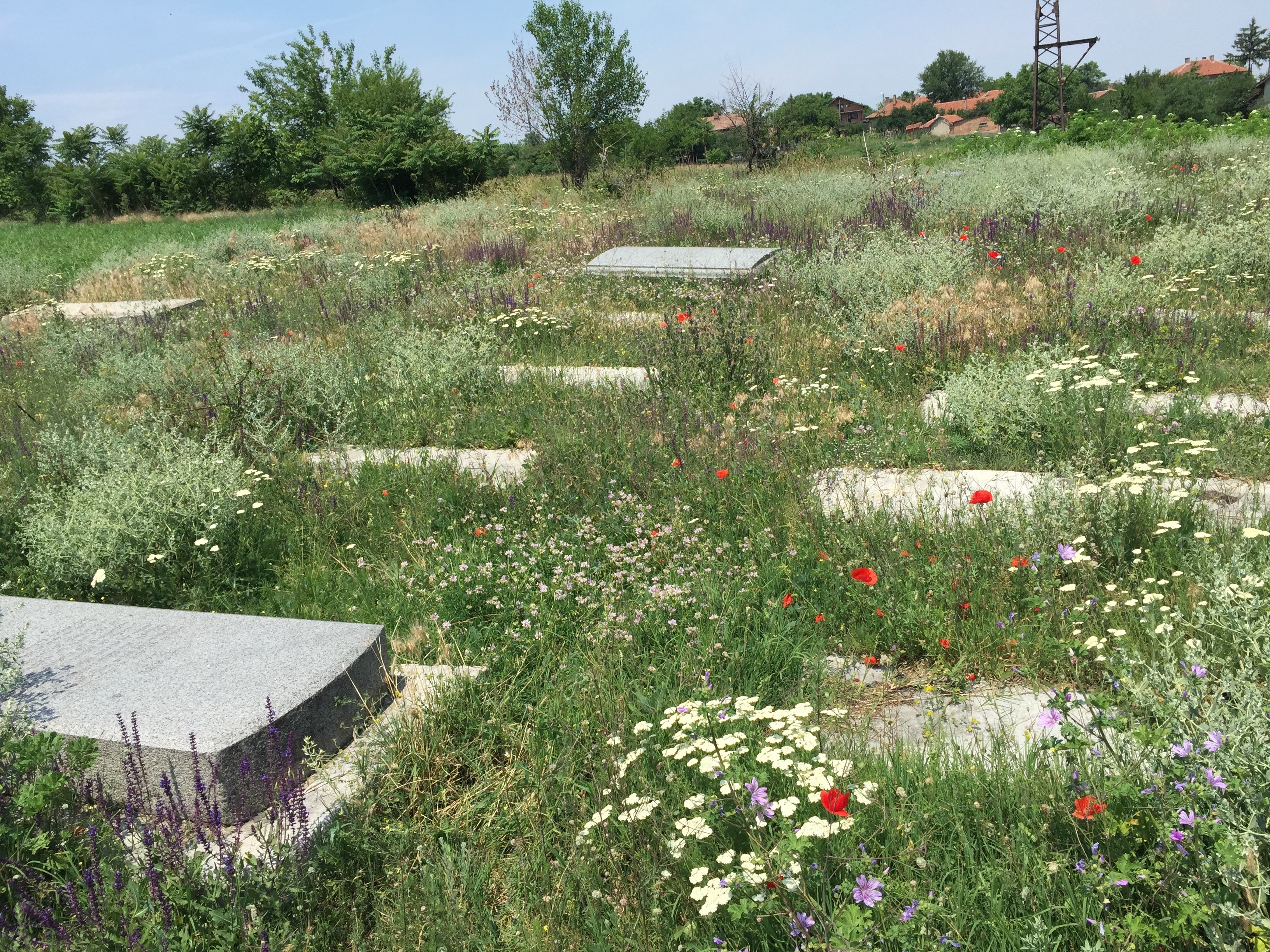
We were guided up a hill through the narrow unpaved streets of the town, to the Jewish cemetery. At the top of the hill, our guide, from one of the four Jewish families living in Lom today, said “Here it is”. He stepped out and stood on a large stone in the road that looked like it was part of the terrain, “This is a headstone”, he continued, “there are many, all over, maybe a few hundred” he said in Bulgarian. Our driver translated for us as he began pointing out the boundaries of the cemetery. We saw dozens of old headstone slabs surrounded by overgrown vegetation, hebrew lettering on the marble, dates, names . . . a cemetery.

                                           IMG_0969  IMG_0968  IMG_0967

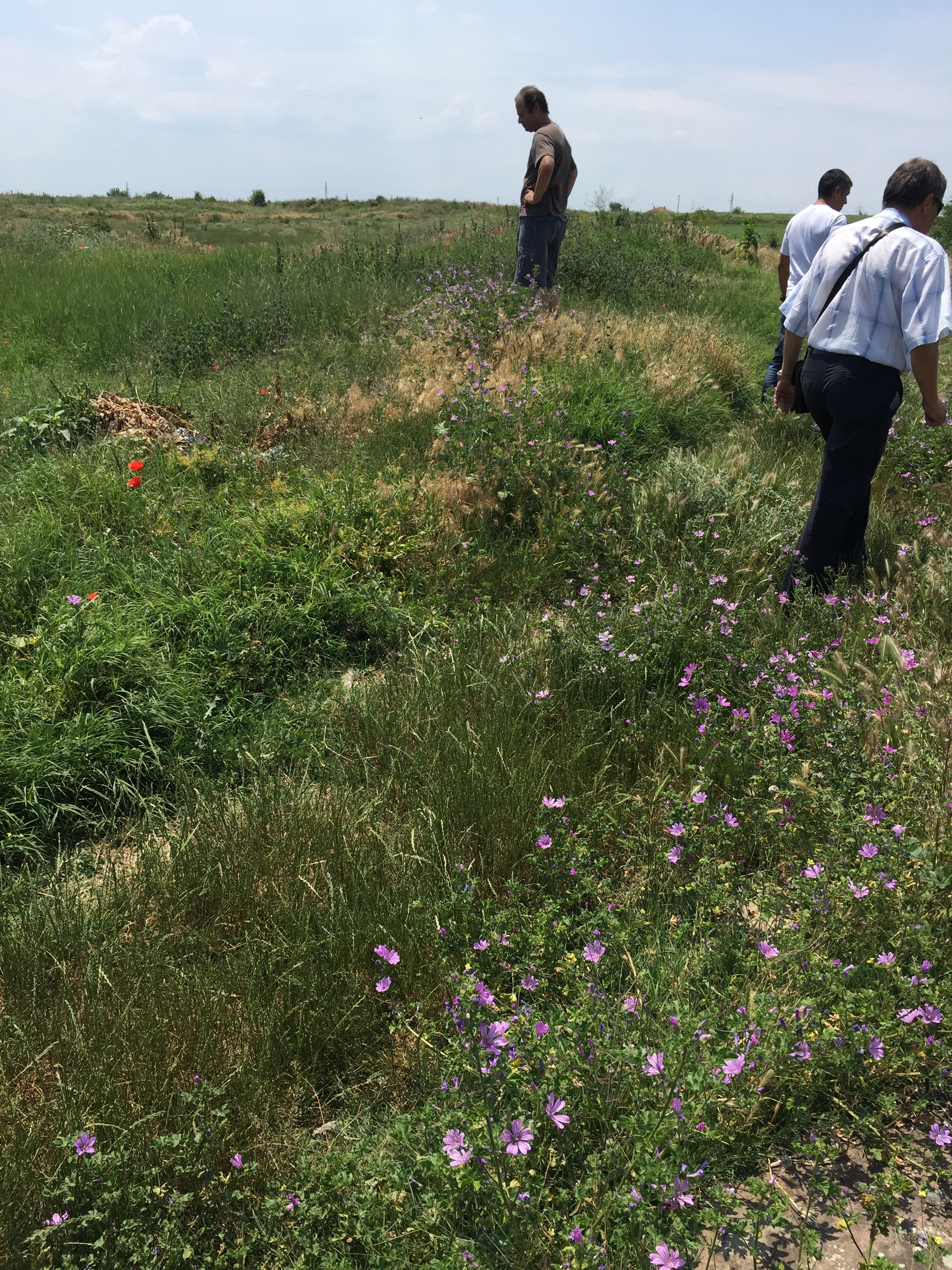
“Where is our great grandmother buried?” I asked.  “Over there, outside the boundary of the cemetery “. “Why was she buried outside the boundaries?” “Because she had no papers proving she was Jewish”, he said pointing to the outskirts of the hill. “They needed papers to prove they were Jewish?” I asked. “Wasn’t their deportation by the Nazis enough to prove they were Jewish?” He shrugged his shoulders, apparently not. We stood on the ground where they were buried, perhaps on top of their graves, perhaps to the right, perhaps to the left, it was impossible to know.

                                                IMG_0962    IMG_0967

We wondered silently, thinking, mourning. Once again I felt something, the air was holding me, embracing me, I closed my eyes and focused on the embrace.

If they are out there somewhere, they will know that we, whom they never met, never loved, never hugged, but whom they might have imagined, are with them, that they are not forgotten, that their precious lives will be recorded into posterity.

An inexplicable thing happened on that lonely but serene hilltop. We had travelled across the world to find out what had happened to our family. We had lived in many great cities, many states, many countries and multiple continents throughout our lives. No roots, really.  On this hill, in this strange town, on the banks of the Danube, a river that always sounded exotic and foreign to me, the place where our family suffered so very much, we found her, we met her, we had roots, we found ourselves touching the spirit of great grandmother Ne’ama Levy Hattem.

Ten Heartbreaking Days in Dupnitsa

Our train ride from Thessaloniki in Greece to Dupnitsa introduced us to the country of Bulgaria. We were passing out of a country whose Jewish community was almost entirely wiped out, ethnic cleansed of Jews, to one where that same ethnic community was saved in its entirety from the goals of The Final Solution.

Crossing into the country was relatively uneventful, except that two stern looking heavy set officials came to our compartment door, looking serious, barked, “passports” at us. I pulled out my American Passport from my theft resistant handbag. I felt intimidated by their attitude and couldn’t help thinking of the terror our relatives felt every time an official interacted with them knowing and feeling they were enemies capable of killing any and all of them without cause at any moment. The words “Polisia” was in stark large yellow letters on the back of their shirts.  They carried guns in their holsters and rested their hands on the stocks of their weapons as they waited for us to turn over our passports, eying us coldly.   “Obama” we heard him say, which initiated a back and forth between us.  I wasn’t sure whether they were being playful or antagonistic.  We handed them our passports.

It was the longest train ride up until this point, six hours, but the time passed quickly in between gazing out the window at the passing scenery, cat naps, moments of levity between us brother and sisters, munching on snacks, writing blogs and journalling. We talked a lot but felt the absence of one. Our oldest brother had chosen not to join us on this trip into the past, and we missed him. He leaves a void in our lives, its painful for us, perhaps for him too.

In 1943, Greece and Bulgaria were enemies, and as such, there were no train tracks connecting the two countries, so once the deportees arrived at the border, rail tracks had to be laid in order for their journey to continue. They were unloaded off of the box cars, had to walk to the new tracks, and then reloaded onto the next set of train cars, this time narrower to fit the Bulgarian tracks and open box cars. There was not only less space causing conditions to be crammed even more, the live sparks from the friction on the tracks were blowing onto their faces and bodies, burning them painfully as they travelled. They arrived at Dupnitsa which was to be their home for ten to fifteen days.

Conditions in this temporary internment camp were deplorable and the treatment by their captors was inhumanly brutal. 1,500 souls were forced to walk from the train station to the tobacco warehouse in the center of the city, surrounded by homes in which townsfolk lived. Food and water was almost non existent and when some of the local Jewish population brought supplies to the prisoners, they was stollen by the Bulgarian police. They were subjected to ongoing body searches including internal vaginal searches in the hopes that jewelry and/or money would be found. They hung out of the high windows of the warehouse crying and begging for help from anyone passing by.

IMG_0821
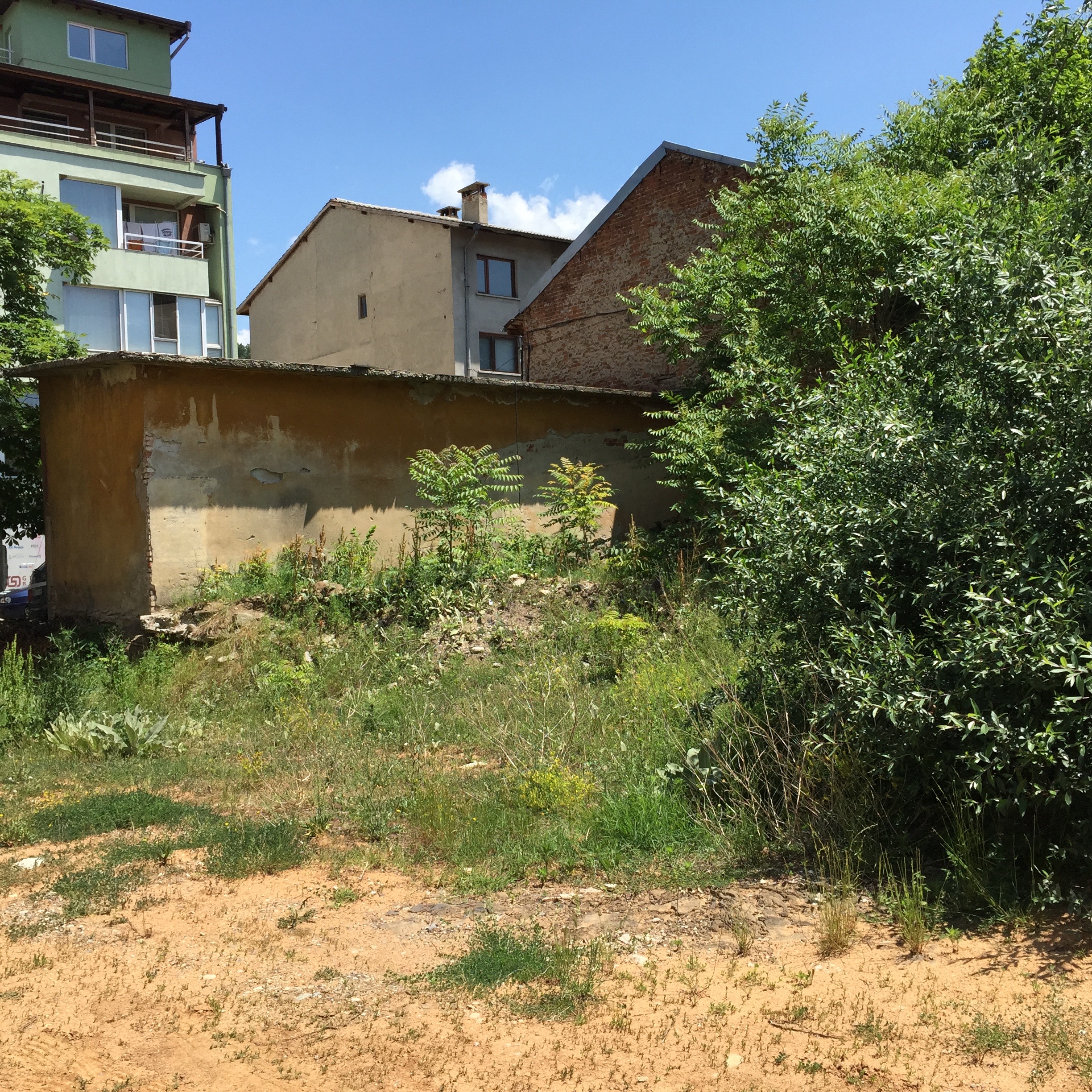
Today, the warehouse no longer exists; the space is an empty lot in between an apartment building and houses, one of which was there in 1943. We looked for the occupant to see if they might recall the events 72 years ago, but they had died and their daughter who was curious about 5 strangers circling her home taking pictures, stepped out. She could give us no information about the events of March 1943.

IMG_0811IMG_0854  IMG_0808

We walked around every corner of this dirty vacant muddy lot for an hour, breathing the air, feeling our still active grief, and wondering if they were propping us up.  I gathered some pebbles and stones, curiously I found unusual black stones that looked and felt like lava but were not. I found more and more, hadn’t seen them anywhere before, not even on the ground next door. Black porous stones, multitudes of them, on this ground, I cried, I wasn’t alone, twenty souls embraced me and held my hands.

Our new dear friend, Loni Hazdai, took us to visit his 87 year old grandmother, who was 15 years old at the time and remembered the events well but became upset when asked to speak of them. She was a witness to the horror, it was a privilege to meet her.  We are grateful to Loni for his warmth and friendship.

Tobacco Warehouses

.           Tobacco keeps interacting with us on this “pilgrimage” as we wind our way through northern Greece and across Bulgaria. The Thrace region of Greece was renowned as a center of the tobacco industry in the first half of the twentieth century.  It was processed and graded in all the cities and towns of Thrace, was the business of many prosperous families and the livelihood of thousands of people throughout the province. It was a region known to produce some of the best tobacco in the world at the time.

.          Our family was was generationally invested in this industry starting with grandfather Solomon Braunstain in Xanthi who made and lost his fortune a few times in the twenties and thirties in tobacco. By 1940, he had been able to find his financial footing again by partnering with a tobacco king from Germany and investing and selling large quantities of high grade tobacco to companies throughout Europe and the USA. After the devastation of WWII, my father was able to pick up the broken threads of his life and build a home for himself in Africa on the backs of thousands of bales of tobacco leaves hanging in his sheds.

.          Tobacco warehouses, the storage venue for tobacco, was the perfect solution for human storage during the deportations of the Thrace Jews on their way to the death camps. They were abundant, they were large enough to sardine crowd thousands, exits were not easily negotiated, and their filth, lack of lavatory facilities, and harsh conditions did not matter.

IMG_0741         IMG_0820

.          We saw these warehouses at every stop on our journey, in Xanthi, in Komotini, in Kavala, in Drama, in Seres, and in Dupnitsa. They were not located on the outskirts of the cities. They were not located in the countryside. They were not located in the undesirable sides of towns. In every case, they were located in the middle of the city, next to cinemas, across from picturesque restaurants where the elegantly dressed citizens enjoyed meals, drank oozo or rakia, where children played in parks. These large ugly structures were (and are) in all cases in the epicenter of city life.  We were particularly struck one afternoon when we were eating lunch in a restaurant in the central park of Drama overlooking natural springs that formed pools of crystal water surrounded by pretty gardens.  We glanced out the window, and there, looming 50 meters to the right was the tobacco warehouse where the Drama Jews were assembled after their forced walk on the night of March 3, 1943 to this facility, in full view and proximity to the restaurant and others in the area, all of which had been there in 1943.

IMG_0980      11401365_10153335938925449_741698387796090264_n

.          Thousands of Jewish souls were marched through their towns, bewildered, disheveled, carrying whatever possessions they were able to grab in the 30 minutes they were given to prepare for their unknown journeys.  They were marched in front of all to see, to the grimy structures they were to be locked up in for days, awaiting their boxcar trains for deportation. It was in these structures that many died from disease, starvation, neglect, and God only knows what other man inflicted causes of death befell them. It was in these structures that they remained for 3 to 15 days, waiting for their attackers to impose the next torment. It was in these structures that they were subjected to brutal internal body searches by Bulgarian police looking for money and jewelry. They were raped, beaten, starved, robbed, and when it seemed there was no other indignity left that hadn’t been imposed, more came, in these tobacco warehouses.

.          It was also a tobacco warehouse in the British colony of Southern Rhodesia, our birth place, that provided our family with the means to become prosperous and successful in life. Tobacco was what my father knew at the age of 25, alone in the world, after being discharged from the Hellenic division of the British Air Force at the end of the war.

.          We have been traveling through Greece and Bulgaria for eleven days, and the most challenging physical issue we are constantly dealing with is tobacco. I think I need to have my lungs checked because second hand tobacco smoke swirls around us in the streets, restaurants, hotels, trains, everywhere, 24/7. It seems that 80% of the people in these two countries are addicted to tobacco, making it quite difficult for us to breathe. We are either grimacing at the smokers all around us, crying at the walls of the tobacco warehouses, wondering if cigarettes provided some sort of solace for the doomed Thrace Jews, I’m not sure what to make of all this, but I am struck by the fact that tobacco seems to be continuing its sordid and inconsistent relationship with us.

Their Nightmare Began in Xanthi

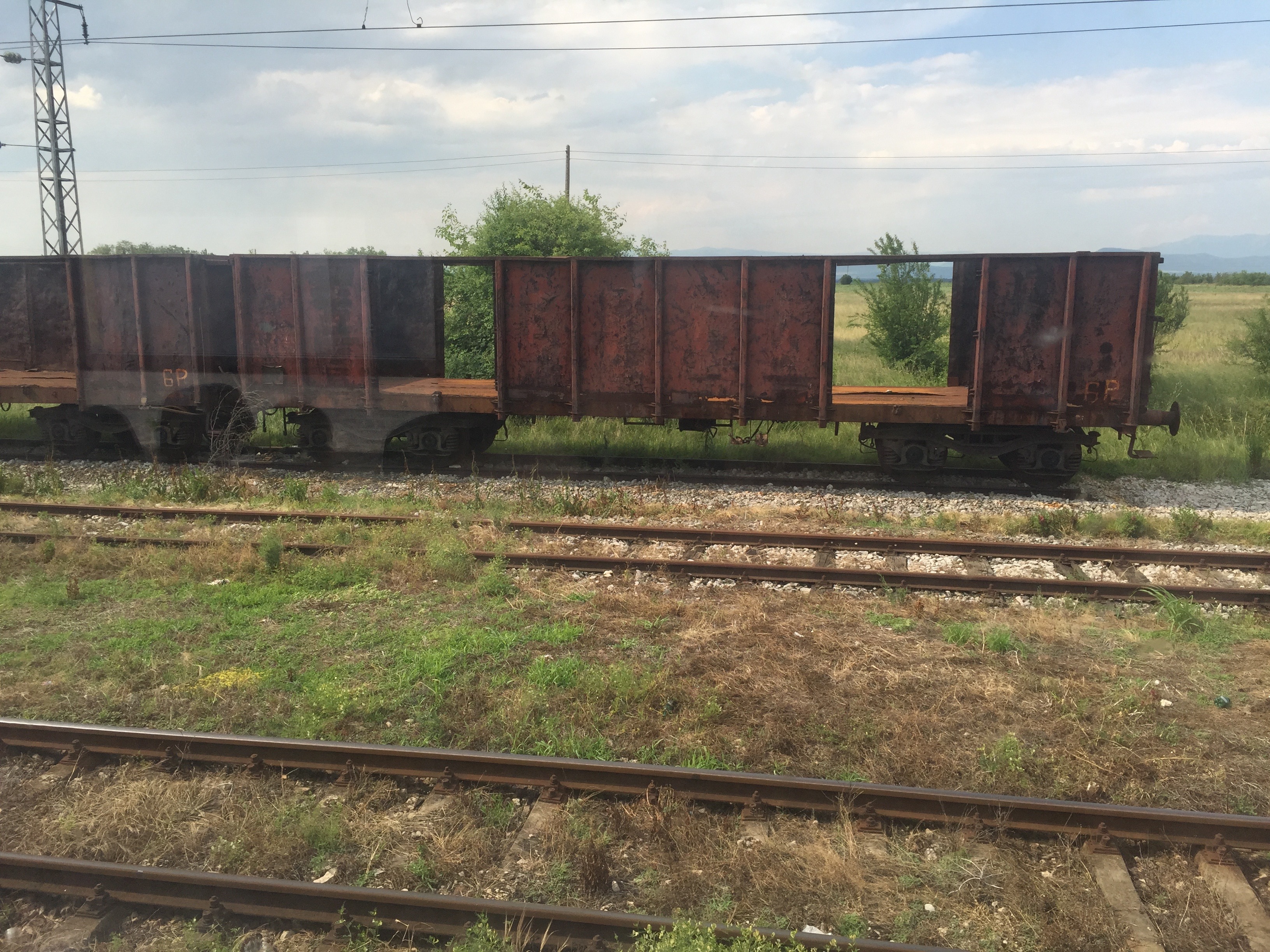
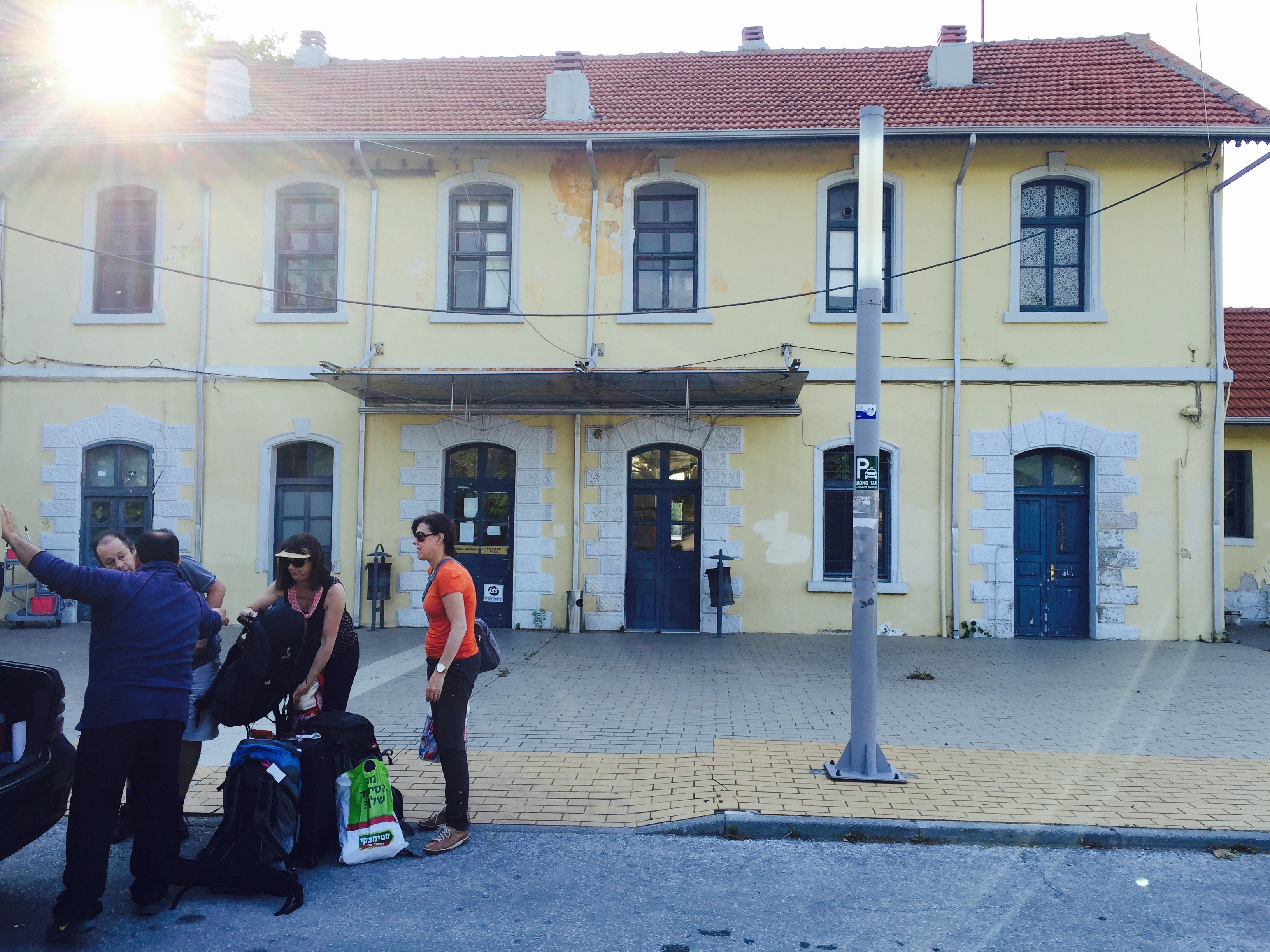
        We arrived in Xanthi in the late afternoon, climbed down the metal steps of the 2nd class train car, carrying our luggage, onto the tracks.  The train station was small and looked like it hadn’t changed since it was built, perhaps a few hundred years ago, except for the ever present graffiti on every public surface in this country.  An old box car greeted us, abandoned on the side of the tracks, the old rust color and I wondered why it was there, not a monument, just there, bolted, a reminder of what these tracks had seen 72 years ago.  Had it been used on that or any other fateful journey?  We walked to the platform, cigarette smoke heavy in the hot air, out of the station and piled into a waiting taxi, “Hotel Elena, parakalo” and wordlessly he sped off the gravel onto the street toward our destination.

IMG_0754IMG_0761

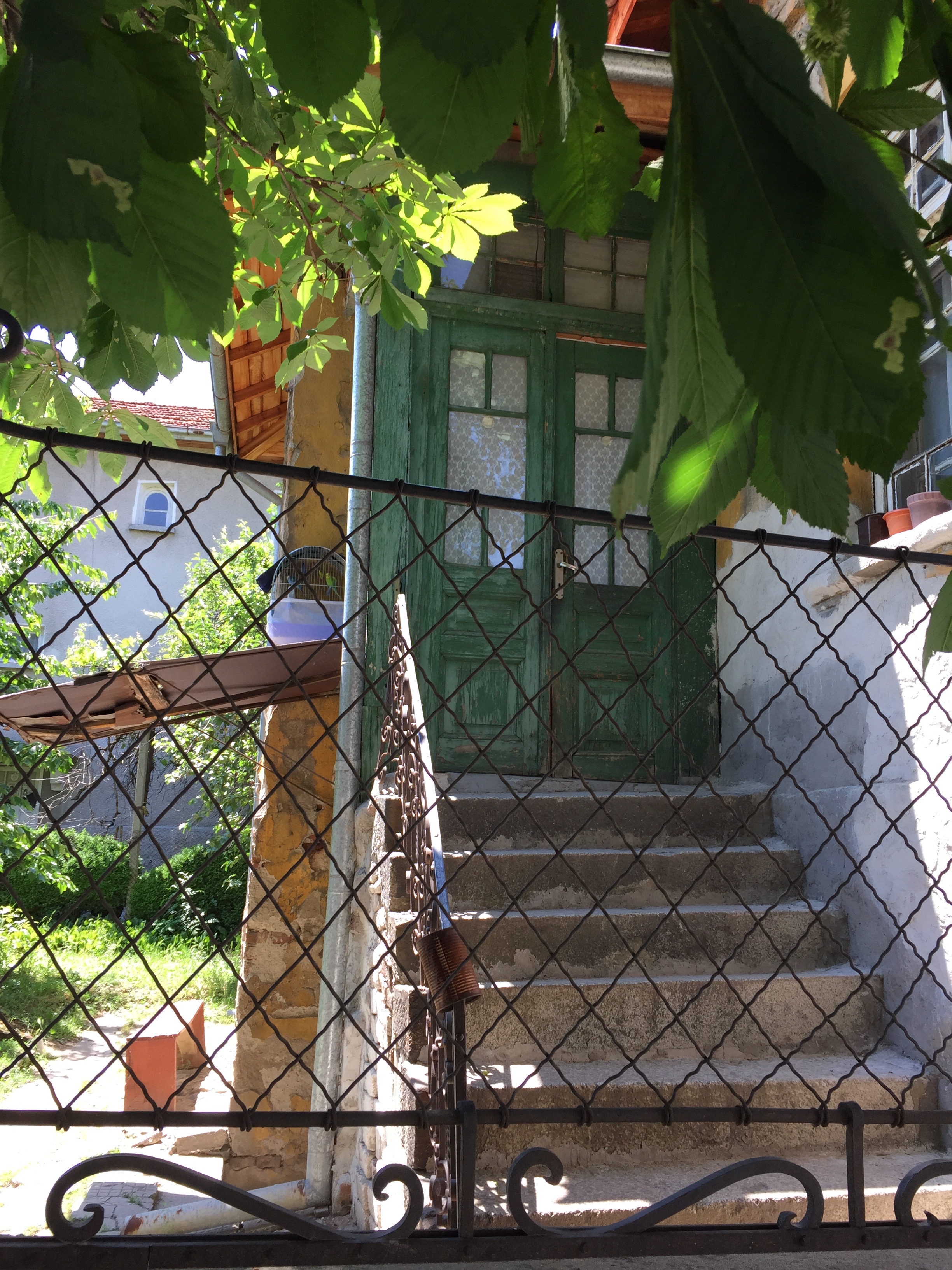
          Xanthi.  So many emotions, feelings and experiences in this town, its old center, charming with its cobblestone streets, its old buildings and homes forming the landscape of the town many of which were owned by people who were deported to Treblinka.  Evening, a thronging atmosphere filled with townspeople and visitors enjoying traditional Greek food, drinking beer, living life.  We thought of the past as we walked the streets, wondering which were the houses that saw the pain of their occupants on that infamous night.  We hoped we would be able to find our family home, but the address we had was one imposed by the Bulgarian forces, not used today.  We will have to do more work on that.

.        Seventy two years ago, in the dead of night, the akcion took place simultaneously in all the towns of Thrace carried out by the Bulgarian police after their government signed an agreement, an agreement between King Boris and Hitler.  People were given half an hour to gather their belongings and ordered to walk to the tobacco warehouse, a mile from the center of the old city.  Brutalized and beaten, 538 Xanthi Jewish men, women and children were herded into this facility, no beds, not bathrooms, no food, no water, and remained there for about three days until their march to the train station where they were herded into boxcars and began their tragic journey.

IMG_0741

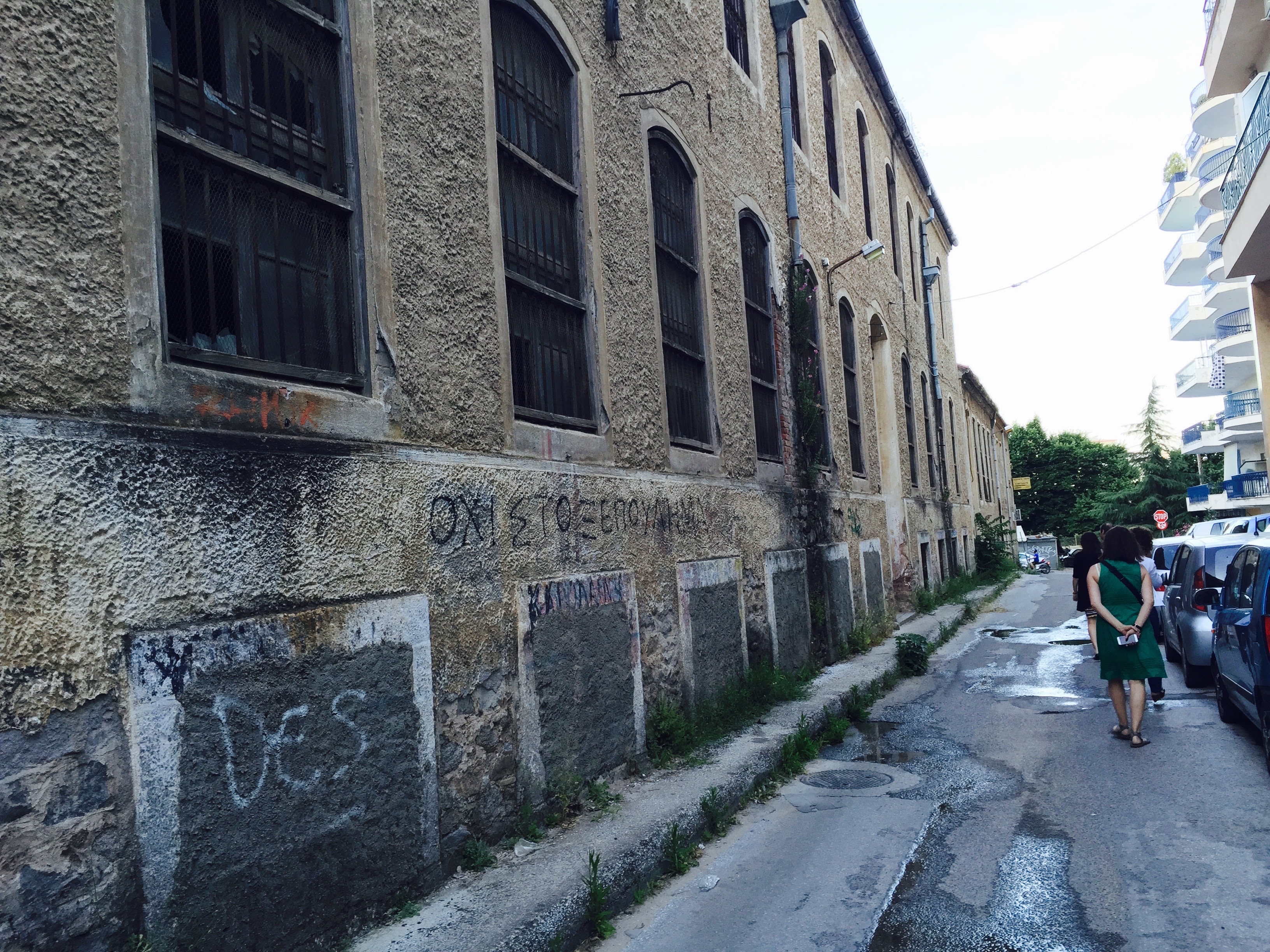
.         The tobacco warehouse.  We walked around the abandoned building, a plaque commemorating those souls had been stolen off of the wall.  Nothing about this place with its broken windows, its filthy walls, its heavy bolted wooden doors communicated anything about the akcion, about the suffering of those forced to occupy its godforsaken interior or their subsequent fate. Onlookers eyed us with puzzled curiosity.  My heart ached, tears filled my eyes, rolled down my cheeks and I wondered if I was there.   I touched the wall, I reached for the window, I felt the surface of the door, maybe one of my relatives had touched those same spots, my hand dirty with building grime, I didn’t care.  And, once again, I gathered some stones, pebbles, sand, and put them in my ziplock bag to take back with me.  I would memorialize a piece of that hallowed ground.

First Part of our Train Journey: From Alexandroupolis to Xanthi

          We are thirsty for any kind of information or documentation about any member of our family.  Our Great Grandfather, Avram Hattem had lived in Alexandroupolis since the city’s founding in 1873.  At the time, it was under Ottoman control and was established under the Turkish name of Dede-Agach.  During our meetings at the History Museum of Alexandroupolis, we saw advertisements for his Men’s and Boy’s clothing store, the name of the business was Hattem & Sons.

.

Attachment-1

.

          This was a precious gift to us because after the destruction of WWII, little information is left, most was destroyed, stollen or simply thrown out by the fascist Bulgarian police.  They were the forces sent in to exercise the Final Solution for the Germans and intense brutality was their way.  Avram was lucky, he died in 1941, an old man, before the deportation and murder of his large family.

.

IMG_2835

.

          We found the family home where they all gathered every Friday evening to welcome the sabbath.  We stood and gazed at it, imagining the family festivities, the joy, the family squabbles, the singing, the prayers, perhaps just a decade before their elimination, in my father’s words:

.

I remember my grandfather on a cool evening, when I was very young, at a seder under the large pergola in the garden of their home with vines growing all around.  Couches and pillows filled the gazebo for everyone to sit.  There must have been over twenty members of the family around the table laughing, joking, praying and singing Alhmania or something sounding like that in Ladino and Avramachi, as they used to address my grandfather, was seated at the head of the table next to my grandma on soft cushions.  Wrestling was a very popular sport in this part of the world and till today.   My grandpa would often take on both me and my cousin Avramico together and wrestle us to the ground.”

.

          For those in our family living in this young port city, the nightmare began in Alexandroupolis where we began our train journey that would end in Poland.  First stop, Komotini for a few hours, then onto Xanthi where my grandparents, aunt and uncle lived.  It was from Xanthi that they were pulled out of bed in the dead of night and the horror began.

.

          The 2nd class train ride was about two hours, comfortable with many open seats.  The rail tracks were the same as theirs.  We saw the same scenery through windows, they saw it through peep holes;  we sat, they stood;  we had sufficient bathroom conveniences, they had none;  we ate when hungry, they had no food;  we drank when thirsty, they had no water;  we reclined on pillows and blankets, they froze on wood floors.  As I gazed out the window, I found myself admiring the beauty of the changing countryside, lush, green, hilly.  Shouldn’t it have been brown and barren?