We arrived in Xanthi in the late afternoon, climbed down the metal steps of the 2nd class train car, carrying our luggage, onto the tracks. The train station was small and looked like it hadn’t changed since it was built, perhaps a few hundred years ago, except for the ever present graffiti on every public surface in this country. An old box car greeted us, abandoned on the side of the tracks, the old rust color and I wondered why it was there, not a monument, just there, bolted, a reminder of what these tracks had seen 72 years ago. Had it been used on that or any other fateful journey? We walked to the platform, cigarette smoke heavy in the hot air, out of the station and piled into a waiting taxi, “Hotel Elena, parakalo” and wordlessly he sped off the gravel onto the street toward our destination.
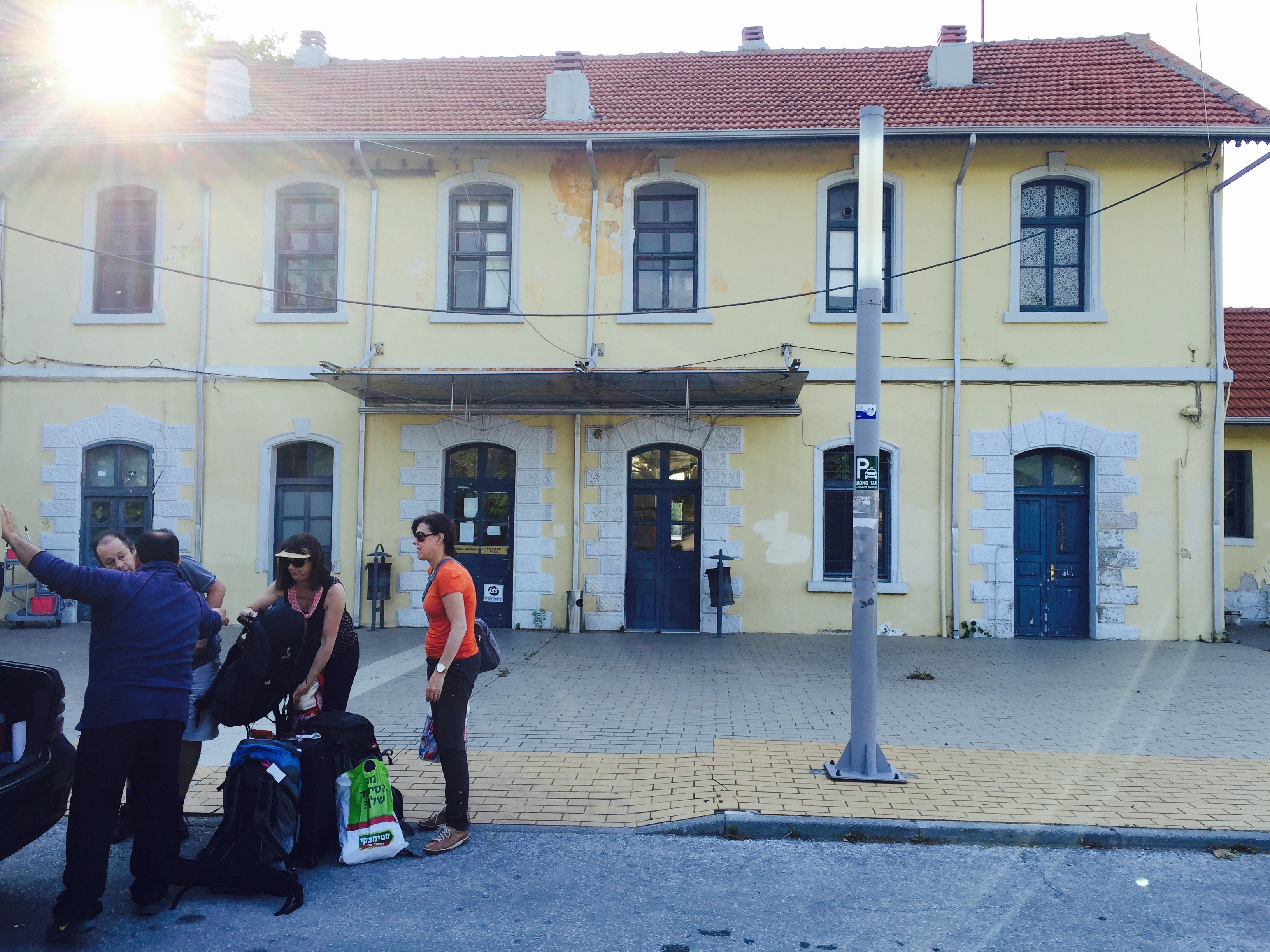

Xanthi. So many emotions, feelings and experiences in this town, its old center, charming with its cobblestone streets, its old buildings and homes forming the landscape of the town many of which were owned by people who were deported to Treblinka. Evening, a thronging atmosphere filled with townspeople and visitors enjoying traditional Greek food, drinking beer, living life. We thought of the past as we walked the streets, wondering which were the houses that saw the pain of their occupants on that infamous night. We hoped we would be able to find our family home, but the address we had was one imposed by the Bulgarian forces, not used today. We will have to do more work on that.
. Seventy two years ago, in the dead of night, the akcion took place simultaneously in all the towns of Thrace carried out by the Bulgarian police after their government signed an agreement, an agreement between King Boris and Hitler. People were given half an hour to gather their belongings and ordered to walk to the tobacco warehouse, a mile from the center of the old city. Brutalized and beaten, 538 Xanthi Jewish men, women and children were herded into this facility, no beds, not bathrooms, no food, no water, and remained there for about three days until their march to the train station where they were herded into boxcars and began their tragic journey.
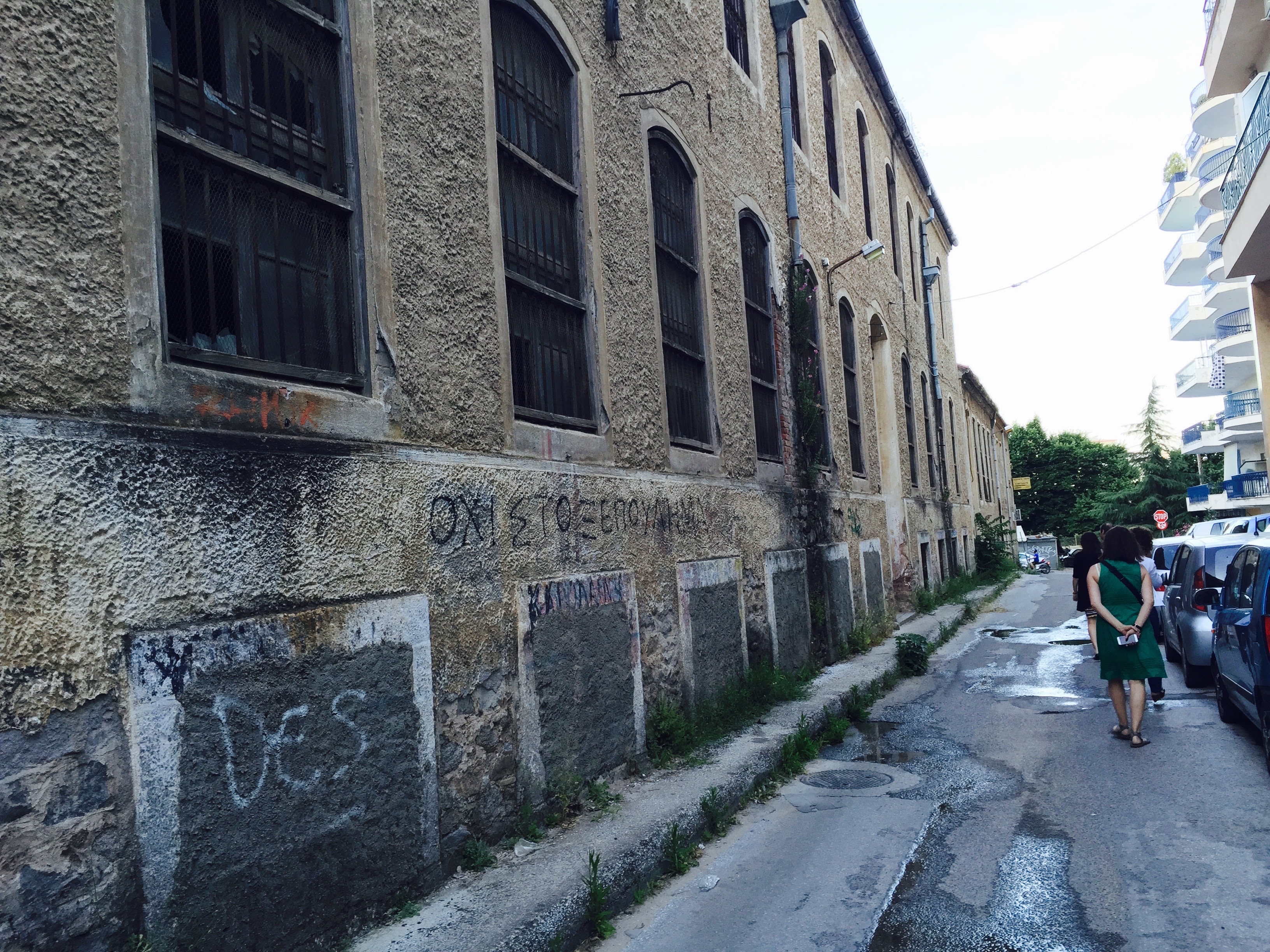
. The tobacco warehouse. We walked around the abandoned building, a plaque commemorating those souls had been stolen off of the wall. Nothing about this place with its broken windows, its filthy walls, its heavy bolted wooden doors communicated anything about the akcion, about the suffering of those forced to occupy its godforsaken interior or their subsequent fate. Onlookers eyed us with puzzled curiosity. My heart ached, tears filled my eyes, rolled down my cheeks and I wondered if I was there. I touched the wall, I reached for the window, I felt the surface of the door, maybe one of my relatives had touched those same spots, my hand dirty with building grime, I didn’t care. And, once again, I gathered some stones, pebbles, sand, and put them in my ziplock bag to take back with me. I would memorialize a piece of that hallowed ground.
 a soul's calling 1943
Dorili met us at our hotel in Xanthi, a very dainty, soft-spoken, well preserved 53 year old woman. She had a kind face, gently framed by the soft curls of her medium-length, light brown hair. An opthalmologist by profession, she carries with her the privilege (and the lonelines) of being the only “Jew” in Xanthi, having moved to the area some years ago. Her home stands high up in the hills, accessed only by miles of steep, windy, road; then a sharp right turn and we are there. We are greeted by a magnificent view of the city and a beautiful home…Here one does not feel the economic burdens currently facing Greece and the hardships that this imposes upon the populace. The Karadedoses are both very successful doctors.
We are impressed by the quality of people we are again meeting. Tasos (Dorili’s Christain husband) and Vassilis, a follower of Greek Orthodoxy. These two, who have put in countless hours of their own time, trying to preserve the memory of the Jews who once lived in this area; both now financing Vassilises efforts to restore the old Jewish cemetery by the railway station, a monumental task. He stands to fight many obstacles, not the least of which are gypsies vandalizing the tombstones again, trying to extract the engraved, marble plaques identifying those souls buried there.
We walk into Eleni Diafonidou’s office, editor of Empros, the local daily paper. We are celebrities here, our story of great interest. We represent the community that once was, we are real life decendents. We tell our father’s story as she furiously takes notes and records us. And so the memory of our family gets recorded forever.
Dorili understands our journey, having herself lost so much family. The name given to her at birth to honor her three aunts, a composite of their names: Dora, Rita & Lisa. We are bonded in our shared losses. She presents us with two large boxes of chocolates, “for your travels” she says. The implication was understood; this was destined to be a very difficult and painful trip. She looks at us, her eyes compassionate and soft, and we say our goodbyes.
LikeLike
Xanthi
As we got off our first train from Alexandropolis to Xanthi, my thoughts were of my Dad and his lost family… Xanthi, the home of my father’s grandmother, his parents, his sister, Elsa and his brother, Fredi.
Flashing back to that fateful night back on March 3rd. 1943, they were awakened to the sound of the fascist Bulgarian officers arresting and ordering them out of their homes. Their property and belongings confiscated as they were herded like cattle to the tobacco warehouse for storage, awaiting those trains. Those cattle car trains, stuffed with people, like sardines packed in a can. Nowhere to move, no food, or water. No place to evacuate. The stench of human feces….
All under the guise that they were being relocated……
The fear, the terror, the panic, the doom they must have felt at that moment. The town where they once felt so safe, the place that they called their home became a living nightmare. Hell on earth!
While in Xanthi, we met Dorili, the only Jewish person currently living in the town today. She too, the daughter of a Holocaust survivor, was very warm and friendly. She embraced us and opened up her home to us. We met her husband, Tasos and their children, in addition to Vassilis and his wife, close friends of theirs. Over Shabbat dinner, we told them the story of our Dad and his lost family. We talked to them about our pilgrimage. They were mesmerized and together, we shed a few tears.
The following day, Dorili and Vassilis made it their business to help us with our mission. They took us all around Xanthi, as well as to the tobacco warehouse. The warehouse was a large two story, deserted and dilapidated old building. taking up a whole block. Steel burglar bars covered the windows. The entry doors bolted closed. We tried to get a glimpse of the inside, but could see nothing.
We were told that s plaque had once been placed on the outside wall of the building, by the entry door, commemorating those that had perished. It was no longer there, it had been removed
We were taken to the location of the old Jewish cemetary. It was enclosed by a wire fence and a locked wrought iron gate. On the inside, we could see overgrown weeds grass and broken gravestones. Upon returning to the site , we were able go inside and see the headstones close up. They were inscribed in Ladino. Most of the gravestones were either missing or broken. The site had been vandalized, and the marble plaques stolen from the headstones.
We continued our search for signs of the once flourishing existence of the Jewish community and of our lost family. We walked all over town, looking for their home, businesses, synagogue, something…. We scoped out elderly people who looked like they might have been around during that dreadful time, total strangers. Did they remember our family Braunstain? We found nothing. Not a trace. This was very disturbing to us.
There was a sparkle of hope however, and that was in Vassili. He had a vested interest in recording Greek history accurately which included the history of the Jewish community of Xanthi. With the help of Dorili and her husband Tasos, he is currently in the process of restoring the old Jewish cemetary. We will help him by getting those grave stones translated into Hebrew and English, through our connections in Israel.
LikeLike