. Tobacco keeps interacting with us on this “pilgrimage” as we wind our way through northern Greece and across Bulgaria. The Thrace region of Greece was renowned as a center of the tobacco industry in the first half of the twentieth century. It was processed and graded in all the cities and towns of Thrace, was the business of many prosperous families and the livelihood of thousands of people throughout the province. It was a region known to produce some of the best tobacco in the world at the time.
. Our family was was generationally invested in this industry starting with grandfather Solomon Braunstain in Xanthi who made and lost his fortune a few times in the twenties and thirties in tobacco. By 1940, he had been able to find his financial footing again by partnering with a tobacco king from Germany and investing and selling large quantities of high grade tobacco to companies throughout Europe and the USA. After the devastation of WWII, my father was able to pick up the broken threads of his life and build a home for himself in Africa on the backs of thousands of bales of tobacco leaves hanging in his sheds.
. Tobacco warehouses, the storage venue for tobacco, was the perfect solution for human storage during the deportations of the Thrace Jews on their way to the death camps. They were abundant, they were large enough to sardine crowd thousands, exits were not easily negotiated, and their filth, lack of lavatory facilities, and harsh conditions did not matter.
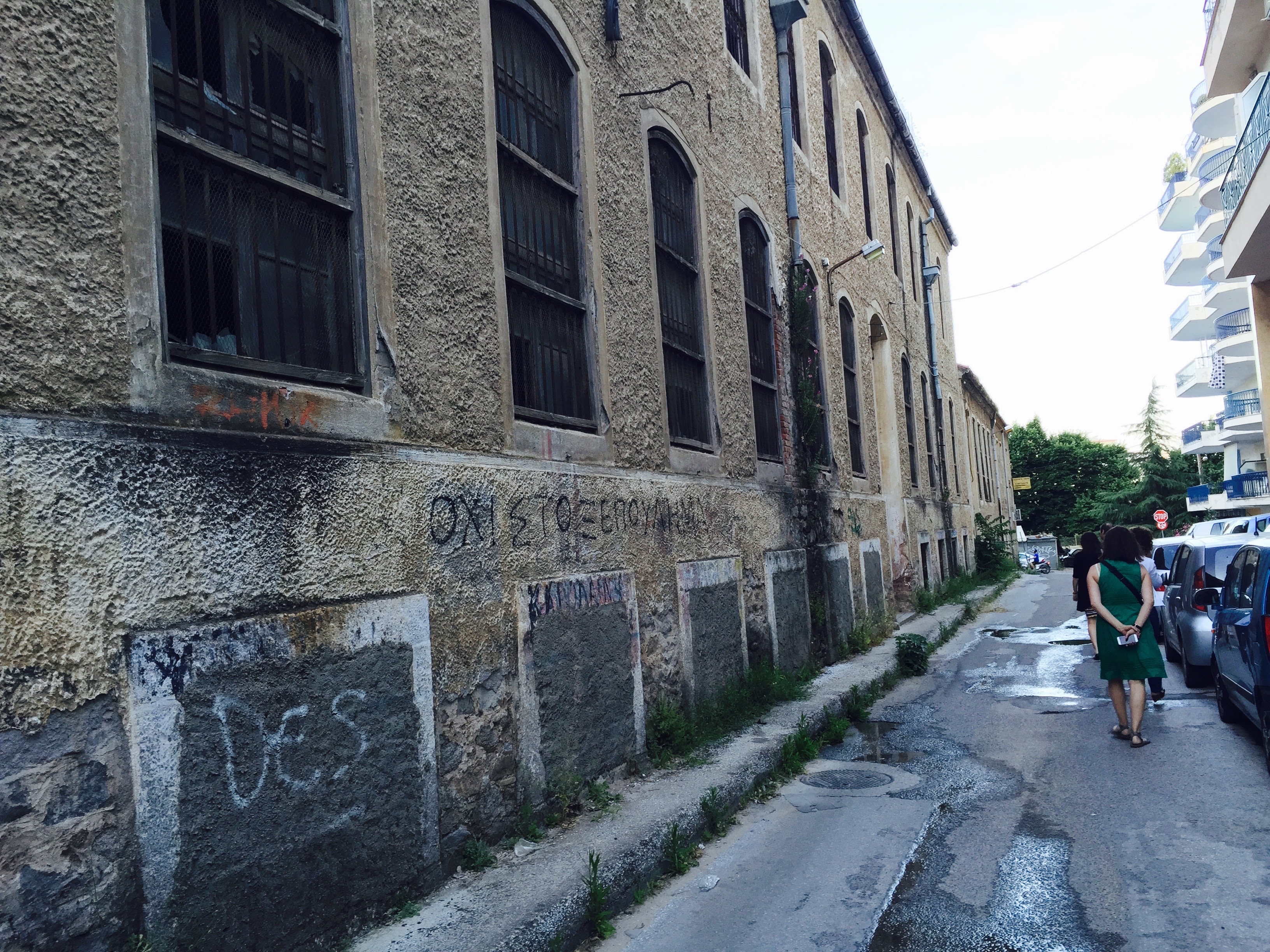

. We saw these warehouses at every stop on our journey, in Xanthi, in Komotini, in Kavala, in Drama, in Seres, and in Dupnitsa. They were not located on the outskirts of the cities. They were not located in the countryside. They were not located in the undesirable sides of towns. In every case, they were located in the middle of the city, next to cinemas, across from picturesque restaurants where the elegantly dressed citizens enjoyed meals, drank oozo or rakia, where children played in parks. These large ugly structures were (and are) in all cases in the epicenter of city life. We were particularly struck one afternoon when we were eating lunch in a restaurant in the central park of Drama overlooking natural springs that formed pools of crystal water surrounded by pretty gardens. We glanced out the window, and there, looming 50 meters to the right was the tobacco warehouse where the Drama Jews were assembled after their forced walk on the night of March 3, 1943 to this facility, in full view and proximity to the restaurant and others in the area, all of which had been there in 1943.


. Thousands of Jewish souls were marched through their towns, bewildered, disheveled, carrying whatever possessions they were able to grab in the 30 minutes they were given to prepare for their unknown journeys. They were marched in front of all to see, to the grimy structures they were to be locked up in for days, awaiting their boxcar trains for deportation. It was in these structures that many died from disease, starvation, neglect, and God only knows what other man inflicted causes of death befell them. It was in these structures that they remained for 3 to 15 days, waiting for their attackers to impose the next torment. It was in these structures that they were subjected to brutal internal body searches by Bulgarian police looking for money and jewelry. They were raped, beaten, starved, robbed, and when it seemed there was no other indignity left that hadn’t been imposed, more came, in these tobacco warehouses.
. It was also a tobacco warehouse in the British colony of Southern Rhodesia, our birth place, that provided our family with the means to become prosperous and successful in life. Tobacco was what my father knew at the age of 25, alone in the world, after being discharged from the Hellenic division of the British Air Force at the end of the war.
. We have been traveling through Greece and Bulgaria for eleven days, and the most challenging physical issue we are constantly dealing with is tobacco. I think I need to have my lungs checked because second hand tobacco smoke swirls around us in the streets, restaurants, hotels, trains, everywhere, 24/7. It seems that 80% of the people in these two countries are addicted to tobacco, making it quite difficult for us to breathe. We are either grimacing at the smokers all around us, crying at the walls of the tobacco warehouses, wondering if cigarettes provided some sort of solace for the doomed Thrace Jews, I’m not sure what to make of all this, but I am struck by the fact that tobacco seems to be continuing its sordid and inconsistent relationship with us.
 a soul's calling 1943