Our train ride from Thessaloniki in Greece to Dupnitsa introduced us to the country of Bulgaria. We were passing out of a country whose Jewish community was almost entirely wiped out, ethnic cleansed of Jews, to one where that same ethnic community was saved in its entirety from the goals of The Final Solution.
Crossing into the country was relatively uneventful, except that two stern looking heavy set officials came to our compartment door, looking serious, barked, “passports” at us. I pulled out my American Passport from my theft resistant handbag. I felt intimidated by their attitude and couldn’t help thinking of the terror our relatives felt every time an official interacted with them knowing and feeling they were enemies capable of killing any and all of them without cause at any moment. The words “Polisia” was in stark large yellow letters on the back of their shirts. They carried guns in their holsters and rested their hands on the stocks of their weapons as they waited for us to turn over our passports, eying us coldly. “Obama” we heard him say, which initiated a back and forth between us. I wasn’t sure whether they were being playful or antagonistic. We handed them our passports.
It was the longest train ride up until this point, six hours, but the time passed quickly in between gazing out the window at the passing scenery, cat naps, moments of levity between us brother and sisters, munching on snacks, writing blogs and journalling. We talked a lot but felt the absence of one. Our oldest brother had chosen not to join us on this trip into the past, and we missed him. He leaves a void in our lives, its painful for us, perhaps for him too.
In 1943, Greece and Bulgaria were enemies, and as such, there were no train tracks connecting the two countries, so once the deportees arrived at the border, rail tracks had to be laid in order for their journey to continue. They were unloaded off of the box cars, had to walk to the new tracks, and then reloaded onto the next set of train cars, this time narrower to fit the Bulgarian tracks and open box cars. There was not only less space causing conditions to be crammed even more, the live sparks from the friction on the tracks were blowing onto their faces and bodies, burning them painfully as they travelled. They arrived at Dupnitsa which was to be their home for ten to fifteen days.
Conditions in this temporary internment camp were deplorable and the treatment by their captors was inhumanly brutal. 1,500 souls were forced to walk from the train station to the tobacco warehouse in the center of the city, surrounded by homes in which townsfolk lived. Food and water was almost non existent and when some of the local Jewish population brought supplies to the prisoners, they was stollen by the Bulgarian police. They were subjected to ongoing body searches including internal vaginal searches in the hopes that jewelry and/or money would be found. They hung out of the high windows of the warehouse crying and begging for help from anyone passing by.

Today, the warehouse no longer exists; the space is an empty lot in between an apartment building and houses, one of which was there in 1943. We looked for the occupant to see if they might recall the events 72 years ago, but they had died and their daughter who was curious about 5 strangers circling her home taking pictures, stepped out. She could give us no information about the events of March 1943.
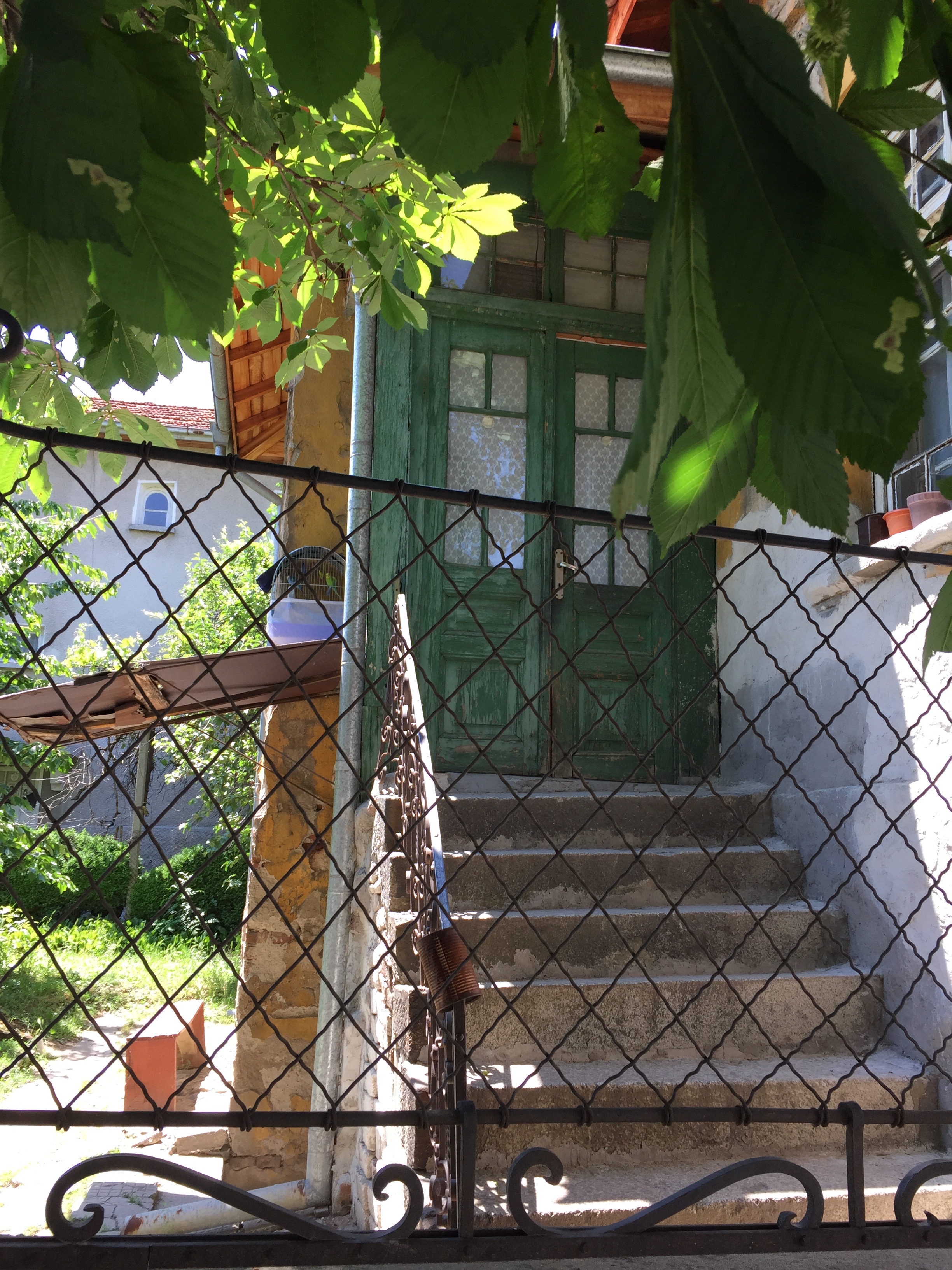

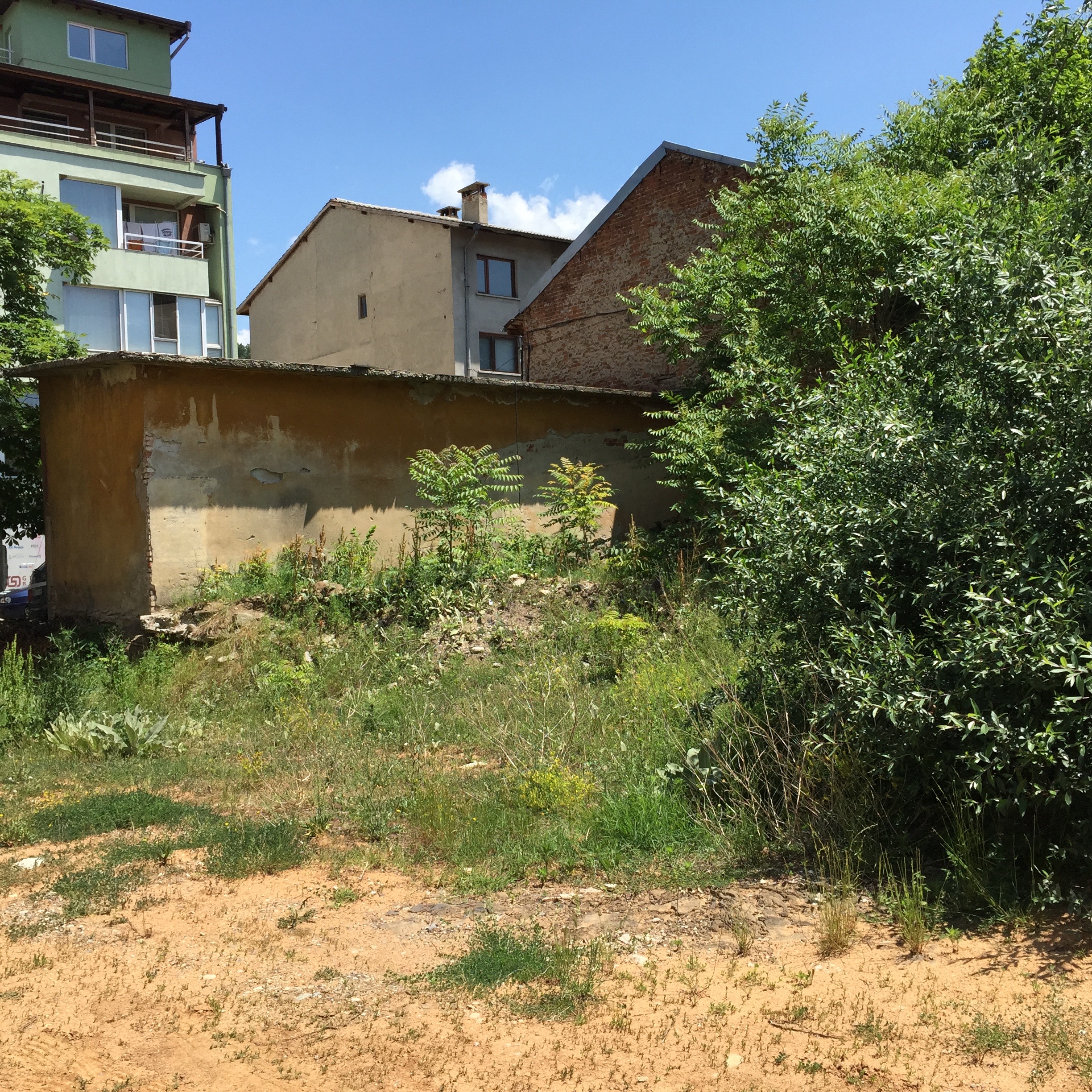
We walked around every corner of this dirty vacant muddy lot for an hour, breathing the air, feeling our still active grief, and wondering if they were propping us up. I gathered some pebbles and stones, curiously I found unusual black stones that looked and felt like lava but were not. I found more and more, hadn’t seen them anywhere before, not even on the ground next door. Black porous stones, multitudes of them, on this ground, I cried, I wasn’t alone, twenty souls embraced me and held my hands.
Our new dear friend, Loni Hazdai, took us to visit his 87 year old grandmother, who was 15 years old at the time and remembered the events well but became upset when asked to speak of them. She was a witness to the horror, it was a privilege to meet her. We are grateful to Loni for his warmth and friendship.
 a soul's calling 1943
Our second class train cabin, right next to the bathroom, was cramped and smelly but sharing these close quarters with only us was somehow a comfort. It created an environment for exchange of thoughts and personal perceptions, an opportunity to come together on issues of the voyage. There were moments of calm and quiet and others of intense laughter. There was bonding.
Two uniformed border police officers knocked on our cabin door. “Passports!” they ordered, my mind taking me back to the Bulgarian fascists who were transporting our family to certain death. Chilling!! “Obama” he says inspecting our passports, bringing me back to reality, his face hard and serious, he was not a fan…they turned around and walked off with our documents. I went back to 1943. A short time later the train is approaching another station…we wait for an announcement. It occurs to us that we have not heard any announcements since boarding this Bulgarian-bound train. We slowly put on our shoes while Mickey tries to make out the signs coming into blurred view through our graffiti-smudged window, everything in Bulgarian. “Dupnitsa”, he suddenly screams, charging off the train yelling “I’ll go out and hold the train.” We scramble off after him, our feet hitting the platform as the train pulls away…whew, that was close!
We look around and before us stands a young guy, slight of build, wearing Bermuda shorts and a long sleeve shirt, “I’m Loni,” he says speaking with a very heavy accent, “end I’m going tchu drive tshu to chur hotel. Tchu vill leve der chur sootcase and then I vill teke Tchu around.” A 43 year old man, with fair color skin and beautiful eyes, sent to us by the Jewish agency of Sofia. He was the president of the local Jewish community here in Dupnitsa and a member of a family who had been in this town for generations. We were relieved to see him, feeling somewhat shaken by the abrupt end to our train ride, heads spinning in wonder as we contemplated how this ride might have ended.
The tobacco warehouse, now replaced by a series of apartment buildings, was a place that drew a lot of emotion. As we walked around the property, each had a sense that there was a spiritual presence all around. We were moved to tears by mental images of the suffering, a hell where prisoners were searched relentlessly, every orifice, starved, raped, our grandparents having stood in this very spot, trapped, tortured and terrified, conditions unimaginable. Why did they not escape? Every warehouse we had seen stood right in the middle of town for all to see. Where were the good people?
Loni brought us to the home of his 85 year old grandmother, Matilda, who was 15 at the time, obviously still haunted by her memories. “They were forced to walk from the train to the warehouse. They were locked up for 3 months. They cried out for food and water. We all tried to help, we all tried,” she recounted, face pained and saddened. She repeated herself over and over, “We all tried to help but there was nothing.”
Lunching at a small place in the center of town, a whole group of people filled the rest of the courtyard dining area. With half an ear I begin to listen to conversations around me, hoping to pick up a familiar sound. No one speaks English! We are strangers here, a curiosity. There was something unsettling about that; was it the language, the history, or simply that it was too foreign? I begin to hear familiar sounds coming from the group all around us, they are ISRAELIES. We start talking to one and within seconds they are sharing our story with the others. The area erupts in conversation, they are moved by us and our purpose. We are the children of Dina Barzelai! The place explodes in song as we all sing together as one…definitely a day to remember.
LikeLike