We walked barefoot on the beach, the gritty sand grains rubbed against our toes and soles, the same sand grains that witnessed the frantic efforts of four young men, 74 years ago, looking for an escape route from the German bombing of the harbor.
In the distance, the misty outline of the island of Samothraki was visible on this cool morning, about 30 miles out to sea. I stood still, an early morning quietness surrounded our thoughts, a breeze brushed my face and I let my mind take in the sights and feelings. The island was the first point of refuge for our father, John, in his path toward becoming a holocaust survivor, giving us all an opportunity at life. It was the the first stop on the route of his escape from the Nazis on March 6, 1941.
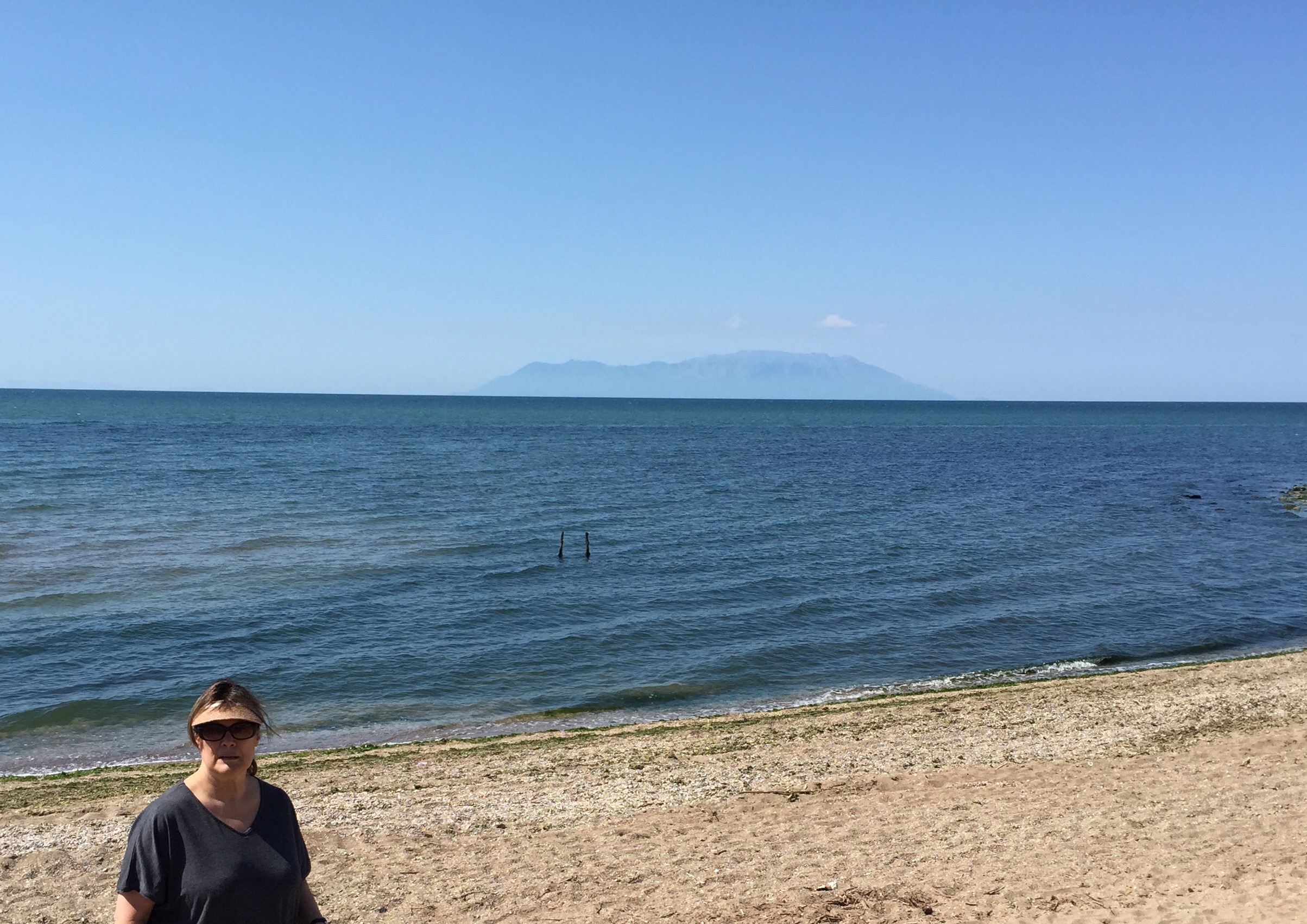
So, here we were, on the spot where he and three friends took in their escape route, jumped onto a barely floating boat they had stolen, and rowed for one and a half days, on the choppy Agean sea through the night, till they landed on the island. I heard my sister whisper, “What a monumental feat!”
I began to recall my father’s story:
“Avramico and I had rushed to the shore, looking for a boat to board. We saw a dingy about 50 feet off the shore. The sea was rough and it was bobbing up and down on the waves. “C’mon,” I yelled, “Let’s take that boat.” He slowed down, we were getting closer to the water as the tide pulled the waves further onto the beach. I turned and looked at him. His face was flushed, his eyes were black. He was having second merry-go-round thoughts, his expression told me so. His native pace slowed to a walk, he looked down. The agitated noise from the town square reached us and I knew what his decision was. “You go”, he said. “I can’t leave, my mother, the family,” tears rolling down his cheeks and I felt a sense of beleaguered loneliness engulf me.
There was no time, I shook his hand, said goodbye. I dove into the waves, swam for a few moments, then turned to look at him. My cap had blown off and was floating on the incoming wave close to where he was standing. He waded in a few feet, reached over and grasped it. He raised his arm above his head and waved my cap at me. I waved back at him. That was the last time I saw my favorite cousin, my best friend.”
We imagined the turbulence of his emotions, and they seemed to travel through time into our hearts. I gathered some pebbles, some broken shells, some grains of sand, and secured them in my zip lock bag, which I would take back with me, those objects which were a witness to our tragic family history.

 a soul's calling 1943